Blog

  • Meet the Oldest Living Animal on Earth: The Incredible Creature That Has Survived for Nearly Two Centuries

    Meet the Oldest Living Animal on Earth: The Incredible Creature That Has Survived for Nearly Two Centuries

    Image
    Image
    Image
    Image
    Image
    Image

    Meet Jonathan: The Oldest Living Land Animal Still Alive Today

    Imagine living through the invention of the telephone, the first airplane flight, two World Wars, the arrival of television, the birth of the internet, and the rise of artificial intelligence.

    Now imagine experiencing all of that without being a human.

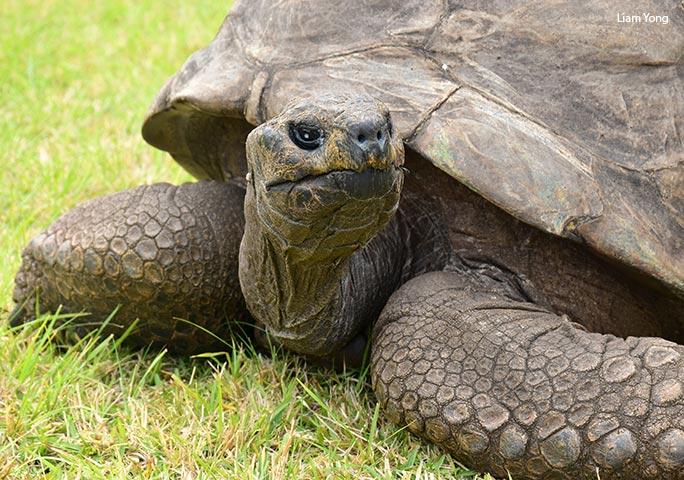
    On a remote island in the South Atlantic Ocean lives a remarkable creature that has witnessed more history than almost anyone alive today. His name is Jonathan, and he is recognized as the oldest known living land animal on Earth.

    What makes Jonathan truly extraordinary is that he is not a whale, shark, or deep-sea creature. He is a giant tortoise that continues to live a peaceful life despite being nearly two centuries old.

    His story has fascinated scientists, animal lovers, and historians around the world because he represents one of nature’s greatest mysteries: extreme longevity.


    A Living Piece of History

    Jonathan is a Seychelles giant tortoise, a species famous for its long lifespan. However, even among giant tortoises, Jonathan is exceptional.

    Historical records indicate that he was already fully grown when he arrived on the island of Saint Helena in 1882. Since giant tortoises require decades to reach adulthood, experts estimate that Jonathan was born around 1832.

    That means Jonathan has lived through nearly 200 years of world history.

    To understand just how old that is, consider some events that had not yet happened when Jonathan was born:

    • The automobile had not been invented.
    • The telephone did not exist.
    • Electric light bulbs were not in common use.
    • The American Civil War had not begun.
    • The Eiffel Tower had not been built.
    • Airplanes were still unimaginable.

    Yet Jonathan remains alive today.


    Life on Saint Helena

    Image
    Image
    Image
    Image
    Image
    Image
    Image
    Image

    Jonathan lives on Saint Helena, a remote volcanic island located in the South Atlantic Ocean.

    The island is perhaps best known as the place where Napoleon Bonaparte spent his final years in exile.

    For Jonathan, however, Saint Helena has been home for well over a century.

    He spends much of his day wandering grassy fields, resting in the shade, and enjoying meals prepared by caretakers. Despite his age, Jonathan continues to move around regularly and interact with his surroundings.

    Visitors from around the world travel to Saint Helena hoping to catch a glimpse of this living legend.


    How Has Jonathan Lived So Long?

    Scientists have long studied animals with exceptional lifespans, hoping to understand the secrets of aging.

    Several factors may contribute to Jonathan’s remarkable longevity.

    1. Slow Metabolism

    Giant tortoises have extremely slow metabolisms. Their bodies use energy efficiently, which may reduce wear and tear on cells over time.

    Because they move slowly and conserve energy, their biological systems experience less stress than those of many other animals.

    2. Few Natural Predators

    Adult giant tortoises are enormous and possess thick protective shells. This means they face relatively few threats once they reach maturity.

    Animals that avoid predators often have more opportunities to evolve longer lifespans.

    3. Stable Environment

    Jonathan has lived in a protected environment for decades.

    Regular food, veterinary care, and freedom from predators have likely contributed to his continued survival.

    4. Genetics

    Researchers suspect that giant tortoises possess unique genetic traits that help them resist age-related damage and disease.

    Scientists continue studying tortoise biology in hopes of learning lessons that could one day benefit human medicine.


    Remarkably Healthy for His Age

    Many people assume an animal approaching 200 years old would be extremely weak or inactive.

    Surprisingly, Jonathan continues to enjoy life.

    Caretakers report that although he has lost much of his vision and sense of smell, he remains active and maintains a healthy appetite.

    Veterinarians monitor his health closely and provide specialized care when necessary.

    Jonathan particularly enjoys eating:

    • Lettuce
    • Apples
    • Bananas
    • Cabbage
    • Carrots
    • Seasonal fruits

    His caretakers often hand-feed him to ensure he receives proper nutrition.

    Considering his extraordinary age, his overall condition continues to amaze experts.


    The Science of Extreme Longevity

    Image
    Image
    Image
    Image
    Image

    Jonathan is part of a small group of animals known for exceptional lifespans.

    Some species capable of extraordinary longevity include:

    • Giant tortoises
    • Greenland sharks
    • Bowhead whales
    • Ocean quahog clams
    • Certain jellyfish species

    Scientists are increasingly interested in understanding why some animals age much more slowly than others.

    Research suggests that long-lived species may possess:

    • Enhanced DNA repair systems
    • Stronger cancer resistance
    • Efficient cellular maintenance
    • Reduced metabolic stress

    These discoveries could provide valuable insights into aging and longevity across all species.


    Witness to Nearly Two Centuries of Change

    Perhaps the most fascinating aspect of Jonathan’s life is not simply his age but everything he has witnessed.

    During Jonathan’s lifetime:

    • More than 40 U.S. presidents have served.
    • The industrial revolution transformed societies.
    • Humans landed on the Moon.
    • Computers were invented.
    • The internet connected the world.
    • Smartphones became common.
    • Artificial intelligence emerged.

    Few living creatures have observed such dramatic changes across generations.

    Jonathan serves as a reminder of how brief human lives are compared with some of nature’s longest-lived animals.


    Why People Around the World Love Jonathan

    Image
    Image
    Image
    Image
    Image

    Jonathan has become much more than an animal record holder.

    For many people, he symbolizes:

    • Resilience
    • Survival
    • Patience
    • Adaptability
    • The wonders of nature

    His story inspires curiosity about wildlife and encourages greater appreciation for conservation efforts.

    As habitats disappear and species face increasing challenges, Jonathan reminds us of the importance of protecting Earth’s biodiversity.

    Every species contains unique biological secrets that could help us better understand life itself.


    Could Any Animal Live Longer?

    Although Jonathan holds the title of the oldest known living land animal, some marine species may live even longer.

    Scientists believe certain Greenland sharks can survive for several centuries, while some ocean-dwelling clams have been estimated to live for more than 500 years.

    However, among land animals currently known to be alive, Jonathan remains unmatched.

    His lifespan continues to astonish researchers and animal enthusiasts alike.


    Conclusion

    Jonathan the giant tortoise is far more than an old animal. He is a living connection to a world that existed nearly 200 years ago.

    From the age of sailing ships to the era of artificial intelligence, Jonathan has quietly endured while civilizations transformed around him. His extraordinary life offers a rare glimpse into the mysteries of aging, survival, and the incredible resilience of nature.

    As he continues grazing peacefully on the island of Saint Helena, Jonathan remains one of the most remarkable living creatures on Earth—a true survivor whose story reminds us that sometimes the greatest wonders of the natural world move at their own slow and steady pace.
  • 7 Incredible Animal Heroes That Saved Other Species – Nature’s Most Heartwarming Rescue Stories

    7 Incredible Animal Heroes That Saved Other Species – Nature’s Most Heartwarming Rescue Stories

    Image
    Image
    Image
    Image
    Image
    Image
    Image

    7 Amazing Stories of Animals Rescuing Other Animals

    Nature is often portrayed as a place where only the strongest survive. We frequently hear stories about predators hunting prey and animals competing for food, territory, and survival. However, hidden among these harsh realities are remarkable moments that reveal a different side of the animal kingdom.

    Scientists and wildlife observers have documented surprising cases in which animals helped, protected, adopted, or even rescued members of completely different species. These unusual encounters challenge our understanding of animal behavior and suggest that compassion, cooperation, and empathy may be more widespread in nature than we once believed.

    From giant elephants helping smaller creatures to dolphins protecting injured animals, here are seven extraordinary stories that prove kindness can sometimes cross species boundaries.


    1. The Dog That Adopted Abandoned Kittens

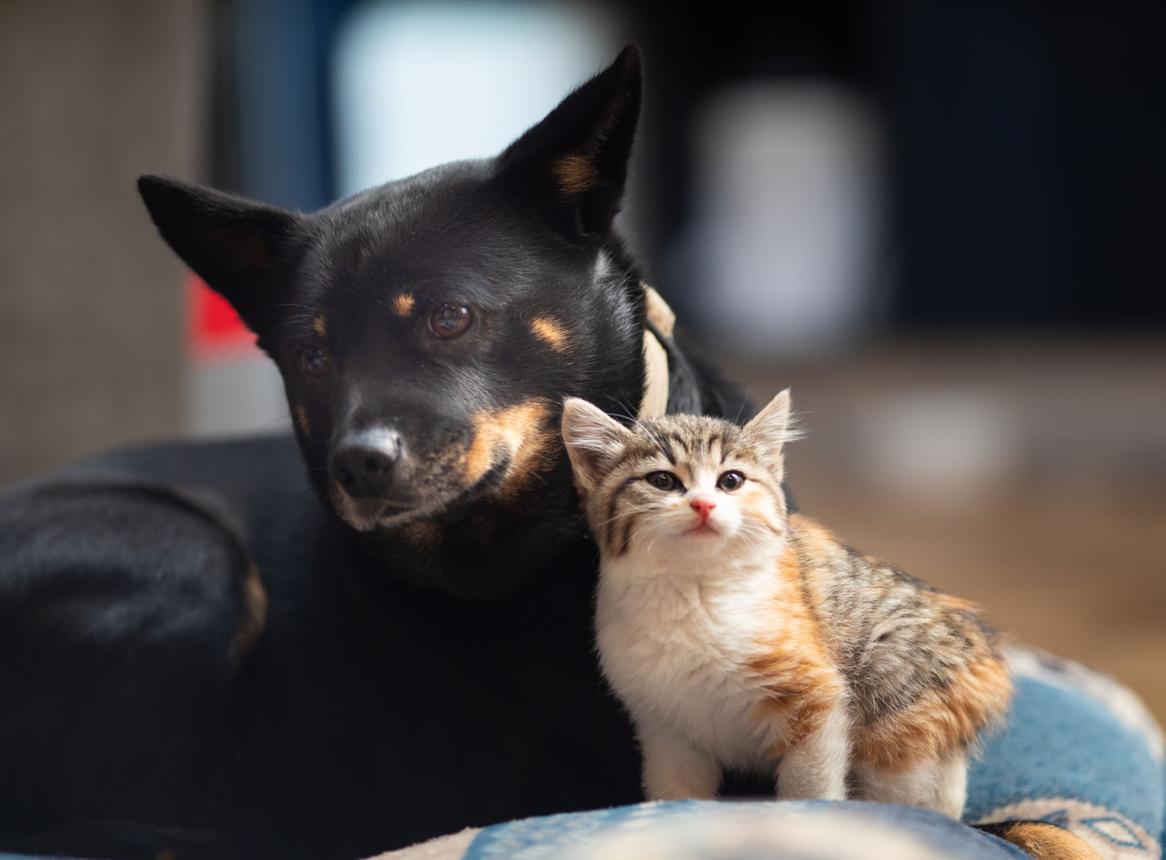
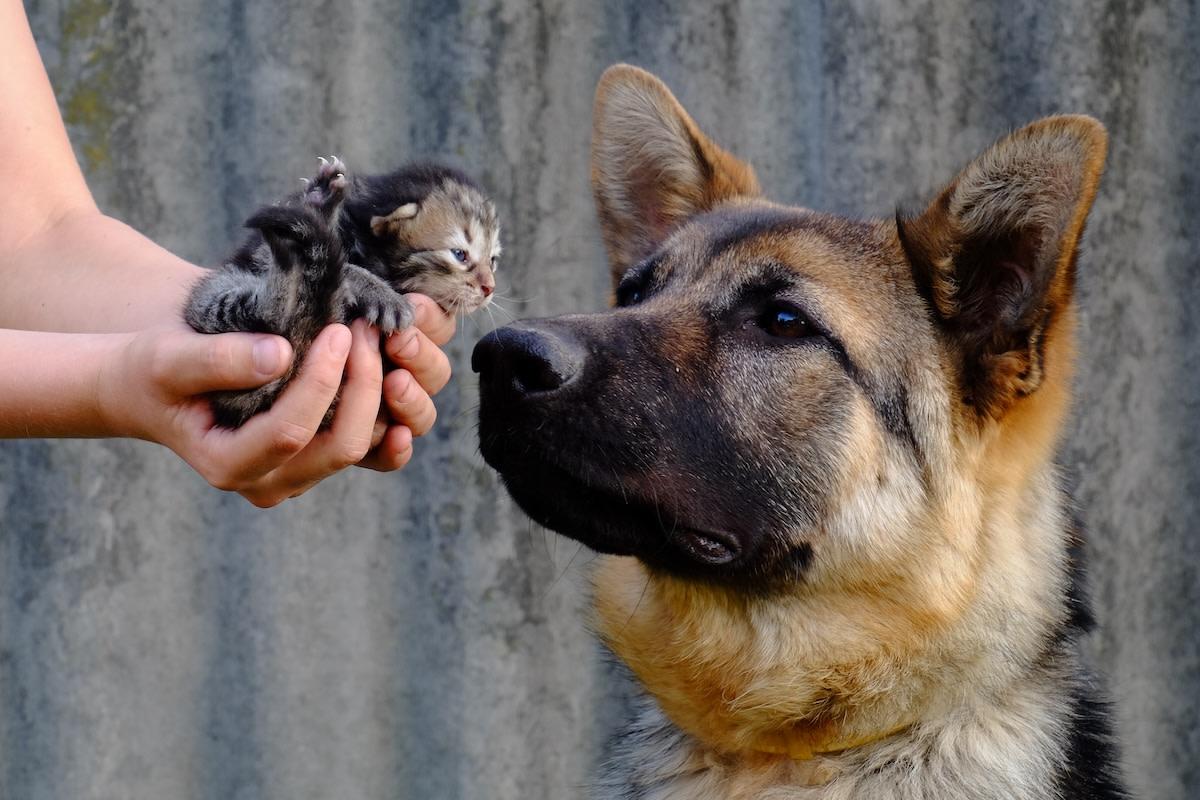
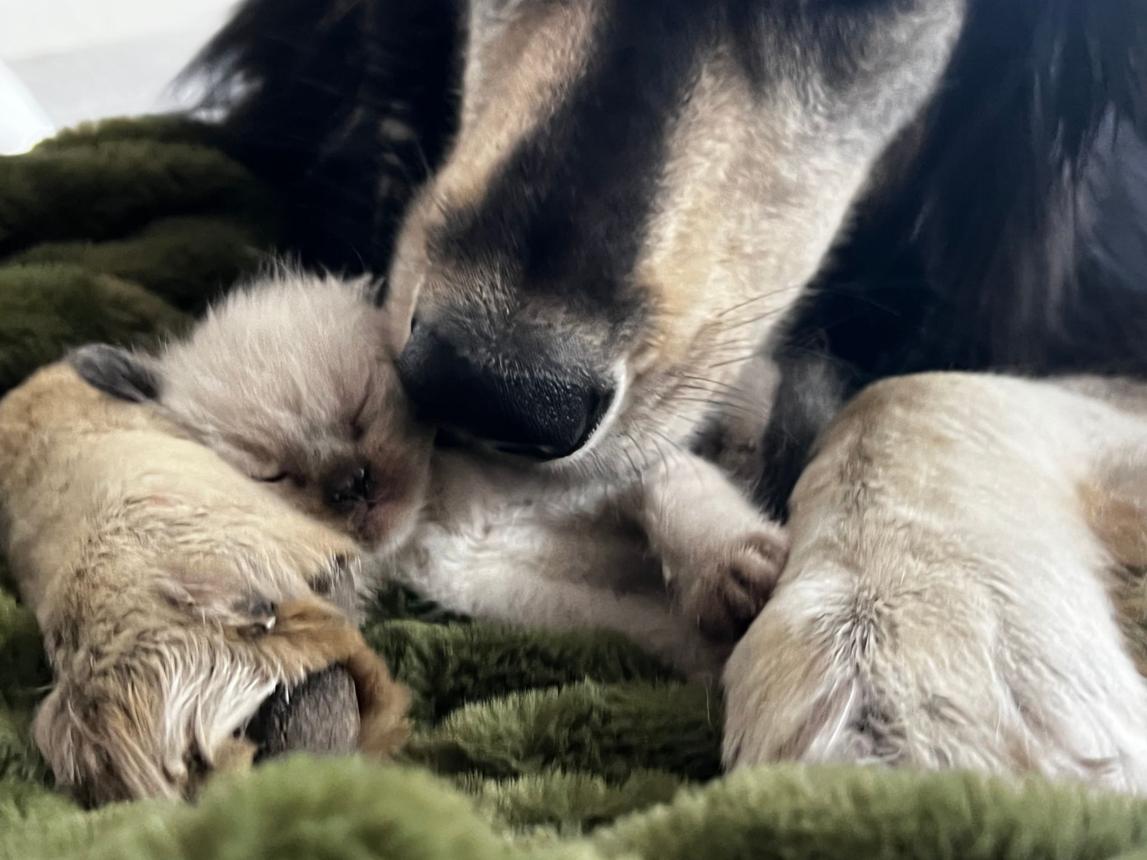
    One of the most heartwarming examples of cross-species care comes from domestic dogs that have adopted orphaned kittens.

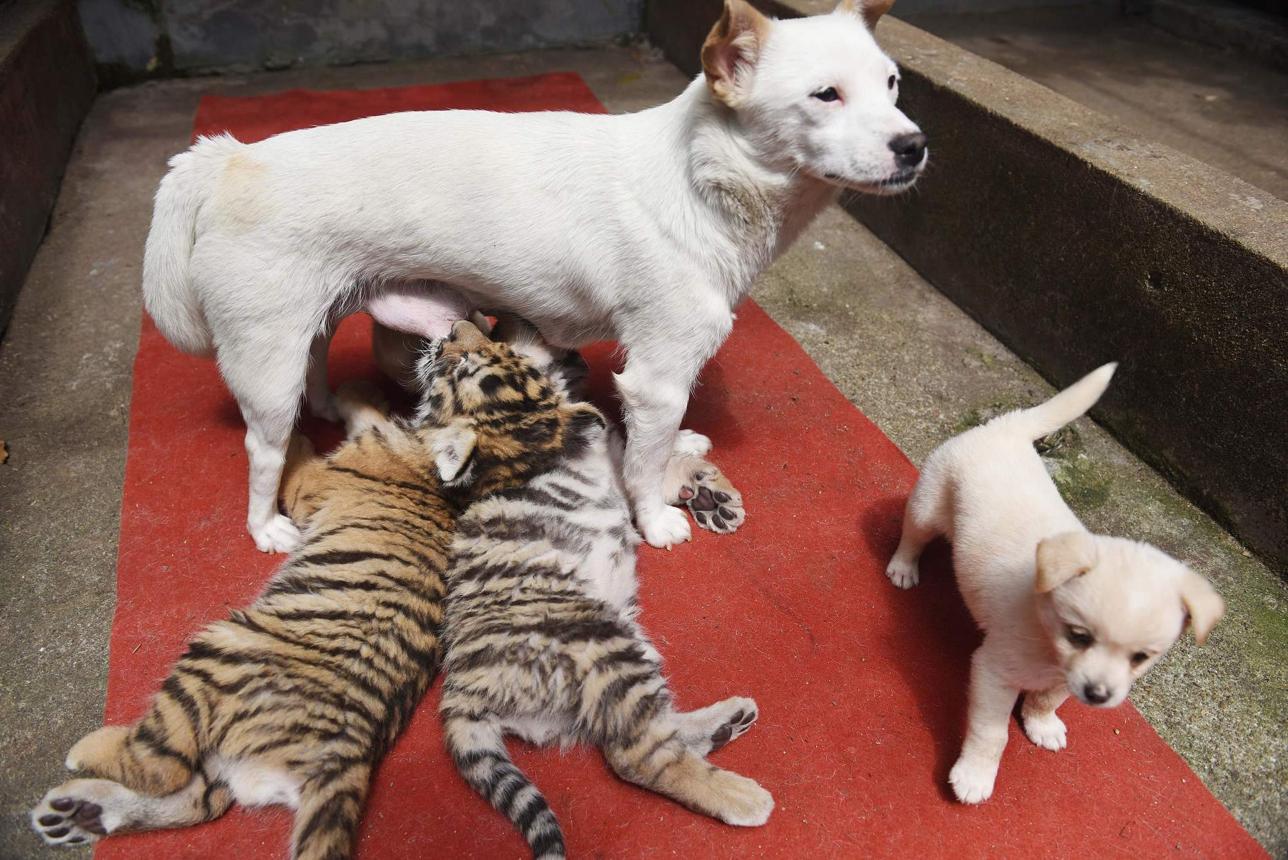
    In several documented cases, mother dogs have discovered abandoned litters of kittens and treated them as their own offspring. Instead of ignoring them, these dogs allowed the kittens to nurse, kept them warm, and protected them from danger.

    Animal behavior experts believe maternal instincts can become so strong that some animals extend caregiving behavior beyond their own species. The result is often an unlikely family where puppies and kittens grow up side by side.

    For many people, these stories demonstrate that nurturing instincts sometimes overcome natural species differences.


    2. Dolphins Helping Injured Marine Animals

    Image
    Image
    Image
    Image
    Image

    Dolphins are among the most intelligent creatures in the ocean. They live in complex social groups and frequently cooperate with one another.

    Researchers have observed dolphins supporting injured dolphins near the surface so they can breathe. Even more surprisingly, there have been reports of dolphins assisting whales and other marine animals experiencing distress.

    By positioning themselves beneath weakened animals and pushing them upward, dolphins may help prevent drowning.

    Although scientists continue studying these behaviors, many experts believe they demonstrate advanced social awareness and cooperation.

    The ocean can be a dangerous environment, but these acts reveal how some marine animals actively assist others in need.


    3. The Elephant That Saved a Trapped Antelope

    Elephants are famous for their intelligence and strong social bonds. However, they have also been observed helping animals outside their own herds.

    Wildlife photographers have recorded elephants removing obstacles that trapped smaller animals. In one remarkable incident, an elephant reportedly used its trunk to help free a young antelope that had become stuck in mud.

    Instead of walking away, the elephant carefully nudged and lifted the struggling animal until it could escape.

    Researchers suggest elephants may recognize distress in other animals and react in ways that appear surprisingly compassionate.

    Such behavior continues to fascinate scientists who study animal cognition and emotional intelligence.


    4. A Gorilla Caring for an Injured Bird

    Image
    Image
    Image

    Gorillas possess remarkable intelligence and emotional complexity.

    Several wildlife observations have shown gorillas interacting gently with injured birds and other small creatures. Rather than harming vulnerable animals, some gorillas have been seen examining them carefully and displaying protective behavior.

    One observation described a gorilla shielding an injured bird from other animals while remaining calm and non-threatening.

    While scientists cannot know exactly what motivates such actions, these encounters suggest that great apes may possess a deeper awareness of other living beings than previously understood.


    5. A Cat That Protected Baby Ducks

    Cats are natural hunters, which makes stories like this particularly surprising.

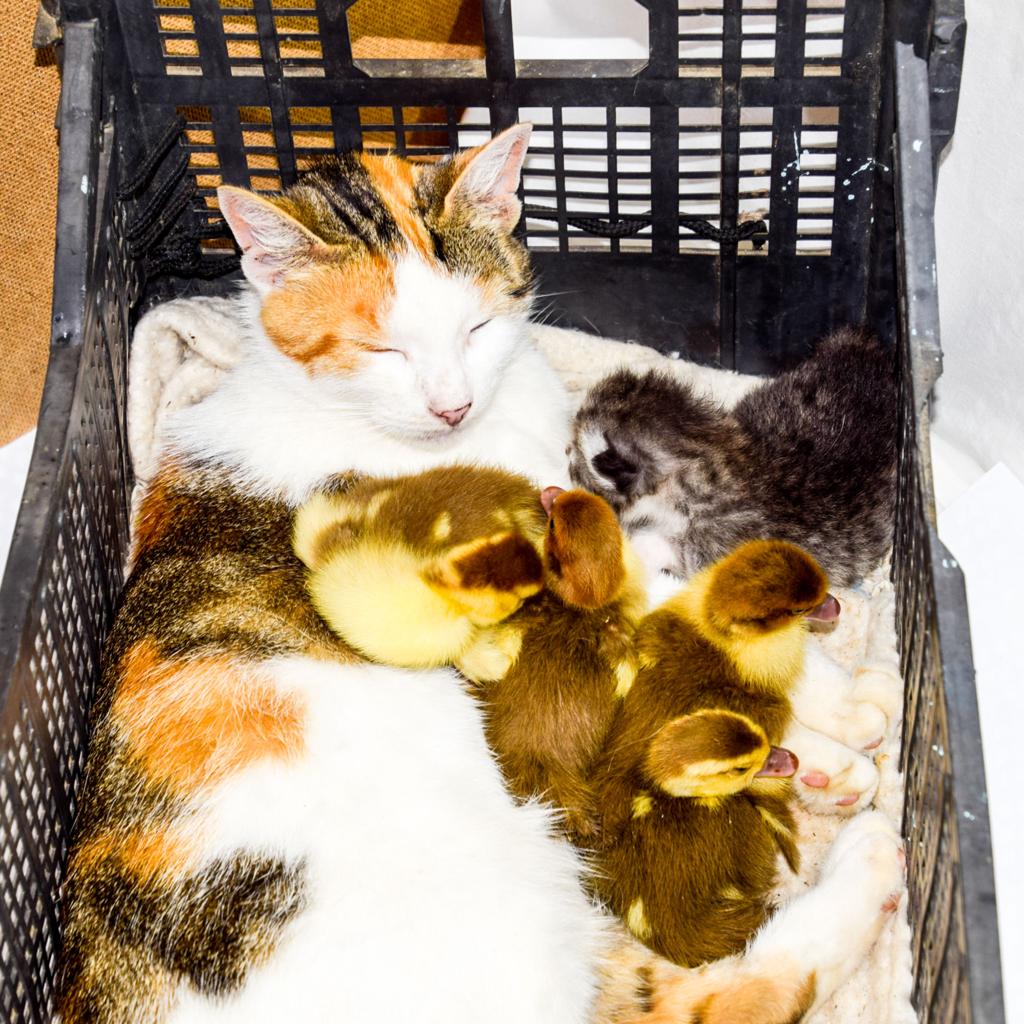
    In a number of unusual cases, domestic cats have formed strong bonds with ducklings and baby birds. Instead of viewing them as prey, the cats treated them as companions.

    One famous example involved a cat that watched over a group of ducklings after they became separated from their mother. The cat stayed close, protected them from danger, and even slept beside them.

    Animal experts believe early socialization and environmental factors may sometimes override natural hunting instincts.

    The result is an unlikely friendship that seems almost impossible at first glance.


    6. Lions Adopting Young Antelope

    Image
    Image
    Image

    Perhaps one of the strangest examples of cross-species care comes from Africa, where researchers have occasionally witnessed lionesses adopting young antelope.

    Normally, antelope are prey animals for lions. Yet in several rare cases, lionesses have protected young antelope calves rather than hunting them.

    These adoptions often last only a short time because of the challenges involved, but they remain among the most extraordinary animal behavior observations ever recorded.

    Scientists speculate that strong maternal instincts may sometimes trigger nurturing behavior even toward animals that would normally be considered prey.

    These rare events continue to puzzle wildlife researchers around the world.


    7. Whales Protecting Seals from Predators

    One of the most dramatic rescue stories in the animal kingdom involves humpback whales.

    Marine researchers have documented humpback whales intervening when killer whales attack seals, sea lions, and other marine animals.

    In some cases, whales positioned themselves between predators and prey. Others used their massive bodies or fins to shield vulnerable animals from attack.

    One famous observation described a whale lifting a seal onto its chest and keeping it out of reach of nearby predators.

    Scientists are still debating why humpback whales behave this way, but the evidence suggests these interventions occur more frequently than once believed.

    These encounters highlight the incredible complexity of life beneath the ocean’s surface.


    Why Do Animals Help Other Species?

    Animal behavior researchers have proposed several explanations for these remarkable acts:

    1. Strong Parental Instincts

    Some animals possess powerful caregiving instincts that occasionally extend beyond their own species.

    2. Social Intelligence

    Highly intelligent animals may recognize distress and respond accordingly.

    3. Curiosity

    Animals are naturally curious and may investigate or assist unusual situations.

    4. Cooperation Benefits Survival

    Helping another animal can sometimes indirectly benefit the helper’s environment or social group.

    5. Empathy-Like Behavior

    Although difficult to prove scientifically, some observations suggest animals may experience emotions similar to empathy.


    What These Stories Teach Us

    For centuries, humans viewed animals primarily as creatures driven by instinct. Modern research is revealing a far more complex picture.

    Animals can form friendships, cooperate with unrelated species, care for vulnerable young, and sometimes even risk their own safety to help others. These behaviors challenge traditional assumptions about intelligence and emotion in the natural world.

    While scientists continue investigating the reasons behind such actions, one thing is clear: nature contains far more compassion and cooperation than many people realize.


    Conclusion

    The animal kingdom is full of surprises. From dogs adopting kittens and dolphins helping injured sea creatures to elephants freeing trapped animals and whales protecting seals, these incredible stories reveal a side of nature that is often overlooked.

    Although survival remains a central part of life in the wild, these extraordinary encounters remind us that kindness, cooperation, and protection can sometimes cross even the boundaries between species.

    The next time you think of nature as a constant struggle for survival, remember these remarkable animal heroes—proof that even in the wild, compassion can appear in the most unexpected places.

  • 7 Amazing Animals That Risked Their Lives to Save Humans – True Stories That Seem Impossible

    7 Amazing Animals That Risked Their Lives to Save Humans – True Stories That Seem Impossible

    7 Amazing Animals That Risked Their Lives to Save Humans – True Stories That Seem Impossible

    Image
    Image
    Image
    Image

    7 Amazing Animals That Tried to Save Human Lives

    Throughout history, humans have often been viewed as the protectors of animals. However, there are countless stories that suggest the relationship works both ways. From loyal dogs and intelligent dolphins to brave cats and gentle gorillas, some animals have displayed astonishing behavior when humans found themselves in danger.

    Scientists continue to study animal intelligence, empathy, and social behavior, yet many rescue stories still leave experts amazed. While some actions may be driven by instinct, others appear to show compassion and a remarkable awareness of human distress.

    Here are seven incredible examples of animals that became unexpected heroes.


    1. The Dog That Saved an Entire Family from a House Fire

    Dogs have earned the title of “man’s best friend” for good reason. Their loyalty and protective instincts have helped humans for thousands of years.

    In one remarkable case, a family was sleeping peacefully when an electrical fire started inside their home during the night. Smoke slowly filled the house while everyone remained unaware of the growing danger.

    Fortunately, the family’s dog sensed that something was wrong. Barking loudly and scratching at bedroom doors, the dog refused to stop until every family member woke up. Thanks to the dog’s persistence, the family escaped the house before the fire spread further.

    Firefighters later confirmed that the family might not have survived if they had remained asleep much longer.

    This story is just one example among thousands of cases where dogs have alerted owners to fires, gas leaks, intruders, or medical emergencies.


    2. Dolphins That Protected Swimmers from Sharks

    Image
    Image
    Image
    Image
    Image

    Dolphins are widely recognized as some of the most intelligent animals on Earth. Their large brains and complex social structures allow them to communicate, cooperate, and solve problems.

    Several documented reports describe dolphins surrounding swimmers who were threatened by sharks. In some cases, dolphins formed protective circles around people, preventing sharks from approaching.

    Marine biologists believe dolphins may react this way because they naturally defend members of their own groups against predators. However, the fact that they occasionally extend this protection to humans remains fascinating.

    One famous incident involved swimmers who reported being surrounded by dolphins for nearly forty minutes while a shark remained nearby. Only after the shark left did the dolphins swim away.

    Whether motivated by instinct or something more complex, these encounters continue to inspire awe among researchers and ocean lovers alike.


    3. A Cat That Detected Danger Before Humans Could

    Many people assume cats are independent and less protective than dogs. Yet some cats have proven to be surprisingly heroic.

    One famous example involved a family whose cat repeatedly jumped onto its owner’s bed and meowed loudly during the night. Initially annoyed, the owner eventually woke up and discovered a dangerous gas leak inside the home.

    Emergency services later confirmed that the leak could have caused a serious explosion.

    Cats possess highly sensitive hearing and smell, allowing them to detect environmental changes before humans notice anything unusual. While they may not always act like traditional guardians, stories like these demonstrate that cats can sometimes save lives in unexpected ways.


    4. The Gorilla That Protected a Young Child

    Image
    Image
    Image
    Image
    Image

    Gorillas are often portrayed as dangerous animals because of their immense strength. However, they are also highly intelligent and capable of displaying gentle behavior.

    In a widely discussed incident at a zoo, a young child accidentally fell into a gorilla enclosure. Witnesses feared the worst, expecting the animal to react aggressively.

    Instead, the gorilla approached carefully and remained near the child while keeping other gorillas at a distance. Zoo staff were able to safely retrieve the child.

    Researchers who study primates note that gorillas possess strong social instincts and often demonstrate nurturing behavior toward vulnerable individuals.

    The incident challenged many people’s assumptions about these remarkable animals.


    5. Elephants That Came to the Rescue

    Elephants are famous for their memory, intelligence, and strong family bonds. Their emotional awareness is so advanced that they have been observed mourning deceased herd members.

    There are numerous accounts of elephants helping humans during emergencies. In some situations, elephants have carried injured people to safety. In others, they have warned communities about approaching danger.

    One particularly extraordinary story described elephants moving people away from coastal areas shortly before a devastating tsunami struck. Some researchers believe the animals sensed environmental changes long before humans recognized the threat.

    Although scientists continue debating exactly how elephants detect danger, their impressive awareness remains undeniable.


    6. A Horse That Refused to Leave Its Injured Rider
    Horses have shared a close relationship with humans for thousands of years. Their sensitivity to human emotions has made them valuable companions, workers, and therapy animals.

    One rider suffered a serious fall while traveling through a remote area. Unable to move and far from help, the individual faced a dangerous situation.

    Instead of running away, the horse stayed nearby. Reports indicate that the horse repeatedly attracted attention from passing people until help arrived.

    The rider later credited the horse with saving their life.

    Such stories highlight the deep bonds that can develop between humans and animals over years of trust and companionship.


    7. The Stray Dog That Became a Local Hero

    Image
    Image
    Image
    Image
    Image

    Not every hero animal lives in a comfortable home.

    In several communities around the world, stray dogs have become local legends after warning residents about fires, earthquakes, or suspicious activity.

    One stray dog repeatedly barked outside a building late at night. Residents eventually investigated and discovered smoke coming from an apartment before the fire spread throughout the structure.

    Many of the people saved had never interacted with the dog before.

    The event became a powerful reminder that courage and loyalty can sometimes appear in the most unexpected places.


    Why Do Animals Rescue Humans?

    Scientists continue investigating why animals occasionally help humans during emergencies.

    Several explanations include:

    • Protective instincts.
    • Social bonding with humans.
    • Curiosity and intelligence.
    • Recognition of distress signals.
    • Learned behavior through experience.

    In highly intelligent species such as dolphins, elephants, dogs, and primates, researchers have observed behaviors that resemble empathy. While we cannot know exactly what animals are thinking, evidence suggests many species are more emotionally complex than previously believed.


    Final Thoughts

    Stories of animals saving human lives remind us that the connection between people and animals is deeper than many realize. Whether it’s a dog waking a family during a fire, a dolphin shielding swimmers from danger, or an elephant sensing a natural disaster, these remarkable moments demonstrate the extraordinary abilities found throughout the animal kingdom.

    While not every story can be fully explained by science, they reveal something important: animals are not simply passive inhabitants of our world. They can be companions, protectors, and sometimes even heroes.

    The next time you see a dog, cat, dolphin, elephant, horse, or gorilla, remember that somewhere in the world, an animal just like it may have helped save a human life.

  • Giants in Tiny Mouths: Incredible Animals That Swallow Prey Larger Than Themselves

    Giants in Tiny Mouths: Incredible Animals That Swallow Prey Larger Than Themselves

    Giants in Tiny Mouths: Incredible Animals That Swallow Prey Larger Than Themselves


    Image
    Image
    Image
    Image

    Introduction

    Nature is full of surprising feats, but few are as astonishing as watching an animal consume something that appears far too large to fit inside its body. In the animal kingdom, size does not always determine what can become a meal. Some predators possess flexible jaws, expandable stomachs, stretchy skin, and specialized hunting techniques that allow them to swallow prey that seems impossibly oversized.

    From giant snakes engulfing mammals to deep-sea fish capable of swallowing animals larger than their own bodies, evolution has produced remarkable adaptations that challenge our understanding of physical limits. These extraordinary feeding strategies help animals survive in environments where food may be scarce, competition is intense, or opportunities for hunting are unpredictable.

    This article explores some of the most fascinating creatures known for eating prey much larger than themselves and reveals the biological secrets that make these astonishing meals possible.


    1. Pythons: Masters of Extreme Eating

    Image
    Image
    Image
    Image

    When people think about animals swallowing oversized meals, pythons often come to mind first.

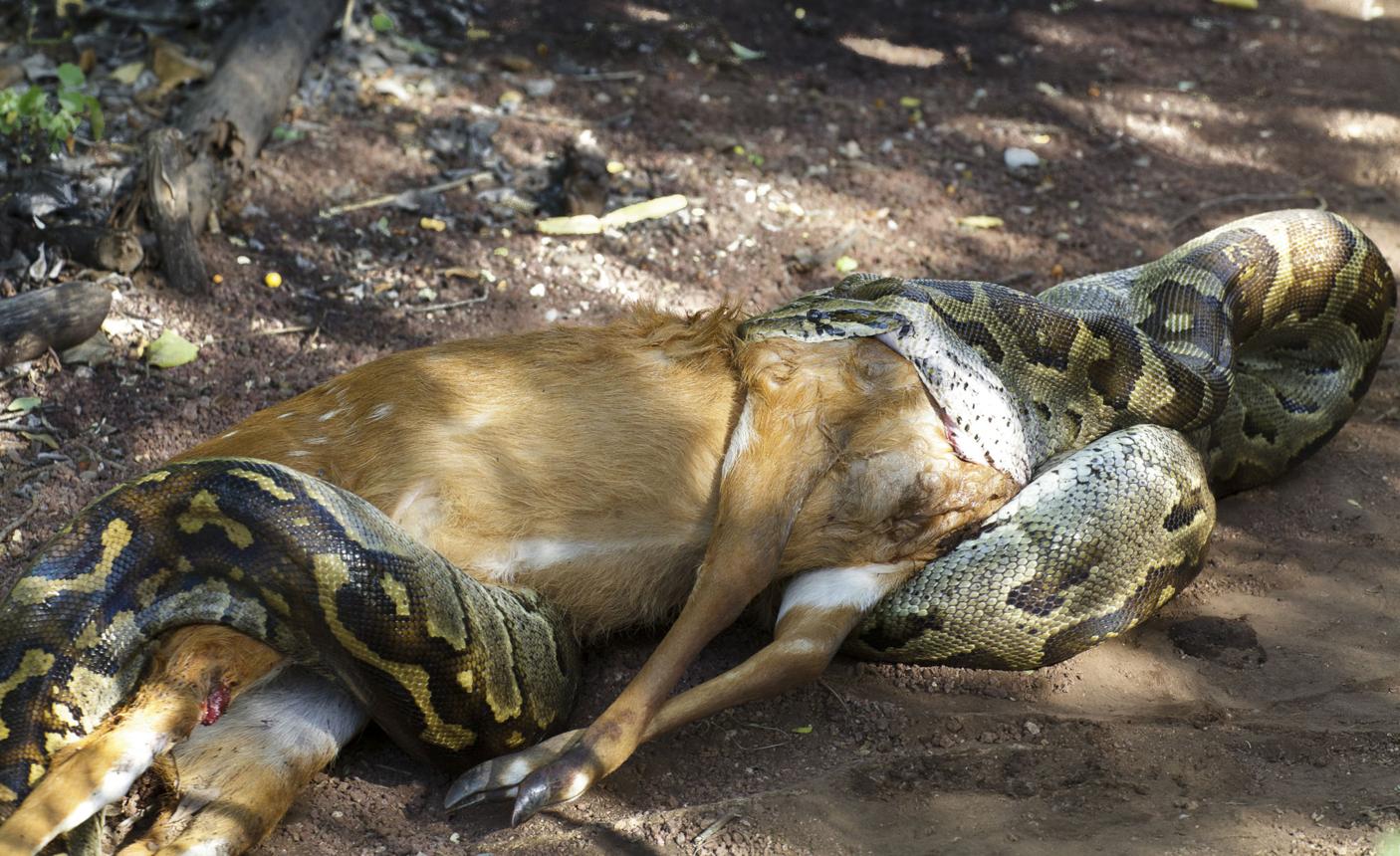
    Unlike mammals, snakes do not chew their food. Instead, they swallow prey whole. What makes pythons extraordinary is their ability to consume animals weighing nearly as much as they do.

    Their jaws are not fused together like human jaws. Instead, multiple flexible ligaments connect the bones, allowing the mouth to stretch around enormous prey. During feeding, the snake alternates the movement of each side of its jaw, gradually pulling the prey inward.

    Researchers have documented large pythons swallowing:

    • Deer
    • Wild pigs
    • Antelope
    • Monkeys
    • Crocodiles

    After such a massive meal, a python may not need to eat again for weeks or even months. Its metabolism dramatically increases during digestion, helping break down bones, muscle, and organs.

    One of the most remarkable aspects is that the snake’s internal organs temporarily adjust to accommodate the huge meal, making pythons among nature’s most impressive eating machines.


    2. Gulper Eels: Deep-Sea Creatures With Expandable Mouths

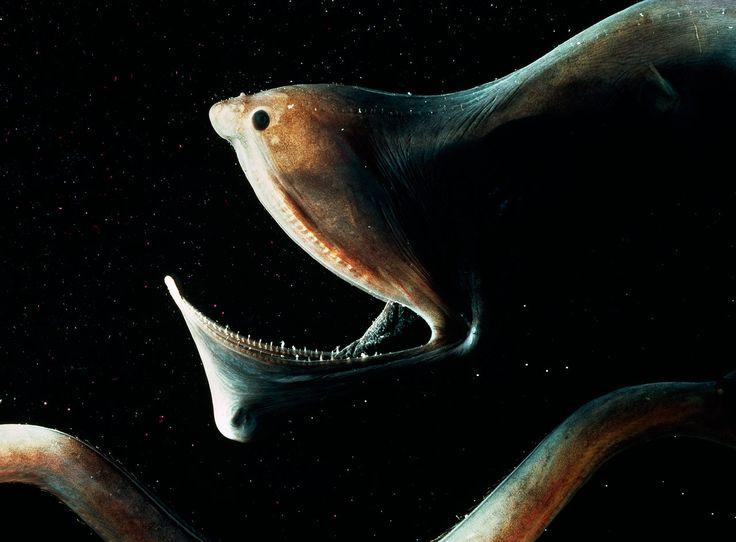
    Far below the ocean’s surface lives one of the strangest predators on Earth—the gulper eel.

    Its body is relatively thin, but its mouth is enormous. The eel’s jaw can expand into a gigantic pouch resembling a pelican’s throat sac.

    In the deep ocean, food is scarce. A meal may not appear for days or weeks. Because opportunities are rare, gulper eels evolved the ability to swallow prey larger than themselves whenever the chance arises.

    Their mouths open incredibly wide, while their stomachs stretch dramatically after feeding. Scientists believe this adaptation increases survival in one of the harshest environments on the planet.

    The sight of a gulper eel with its giant mouth fully extended is so unusual that it resembles a creature from science fiction rather than a real animal.


    3. Frog Versus Snake: Unexpected Predator Success

    Image
    Image
    Image
    Image

    Frogs are often viewed as prey animals, yet some species can be surprisingly aggressive hunters.

    Large frogs, especially bullfrogs, have been observed swallowing snakes, birds, rodents, and even other frogs. In many cases, the prey appears far too large to fit inside the frog’s mouth.

    The secret lies in their flexible jaws and powerful swallowing muscles. Once prey is captured, frogs use their eyes to assist in pushing food toward the throat. Their eyeballs actually retract downward into the skull during swallowing, helping force food into the digestive tract.

    This unusual adaptation allows certain frogs to tackle prey far larger than most people would imagine.

    Wildlife photographers occasionally capture astonishing scenes of frogs slowly swallowing snakes almost equal to their own body length, creating some of nature’s most surprising feeding encounters.


    4. Pelicans: More Than Just Fish Catchers

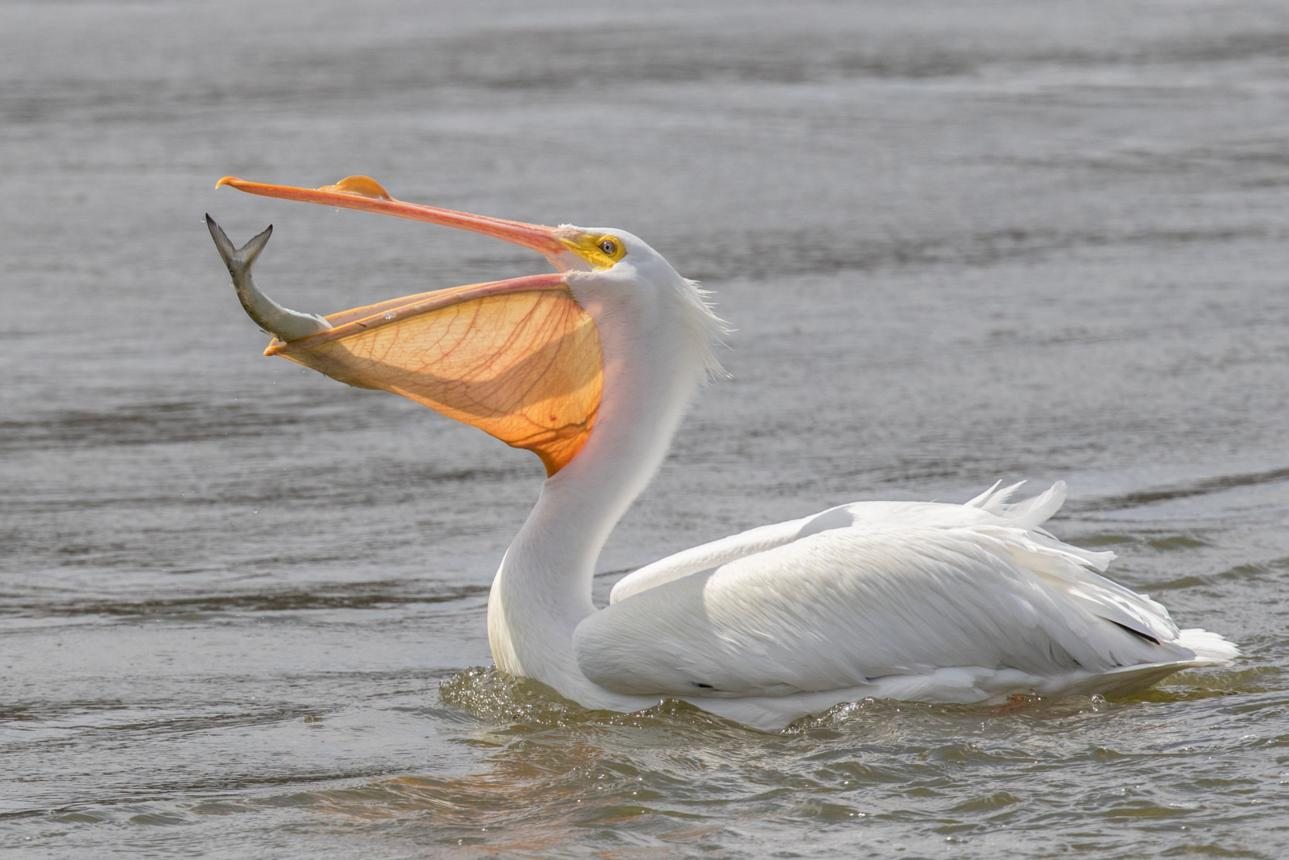
    Most people recognize pelicans by the huge pouch hanging beneath their beaks. While they commonly eat fish, their feeding behavior can be much more dramatic.

    A pelican’s pouch can expand enormously, allowing it to scoop large volumes of water and prey simultaneously. Sometimes pelicans attempt to swallow surprisingly large fish that barely fit inside their throats.

    There have even been reports of pelicans consuming:

    • Ducks
    • Pigeons
    • Small seabirds
    • Large fish nearly half their body size

    The pouch functions like a giant net. Once prey is trapped, water drains away while the animal remains inside.

    Their expandable throat and highly flexible neck allow pelicans to process meals that appear impossible when compared to the size of their heads.


    5. Goliath Groupers: Ocean Ambush Giants

    Image
    Image
    Image
    Image
    Image
    Image

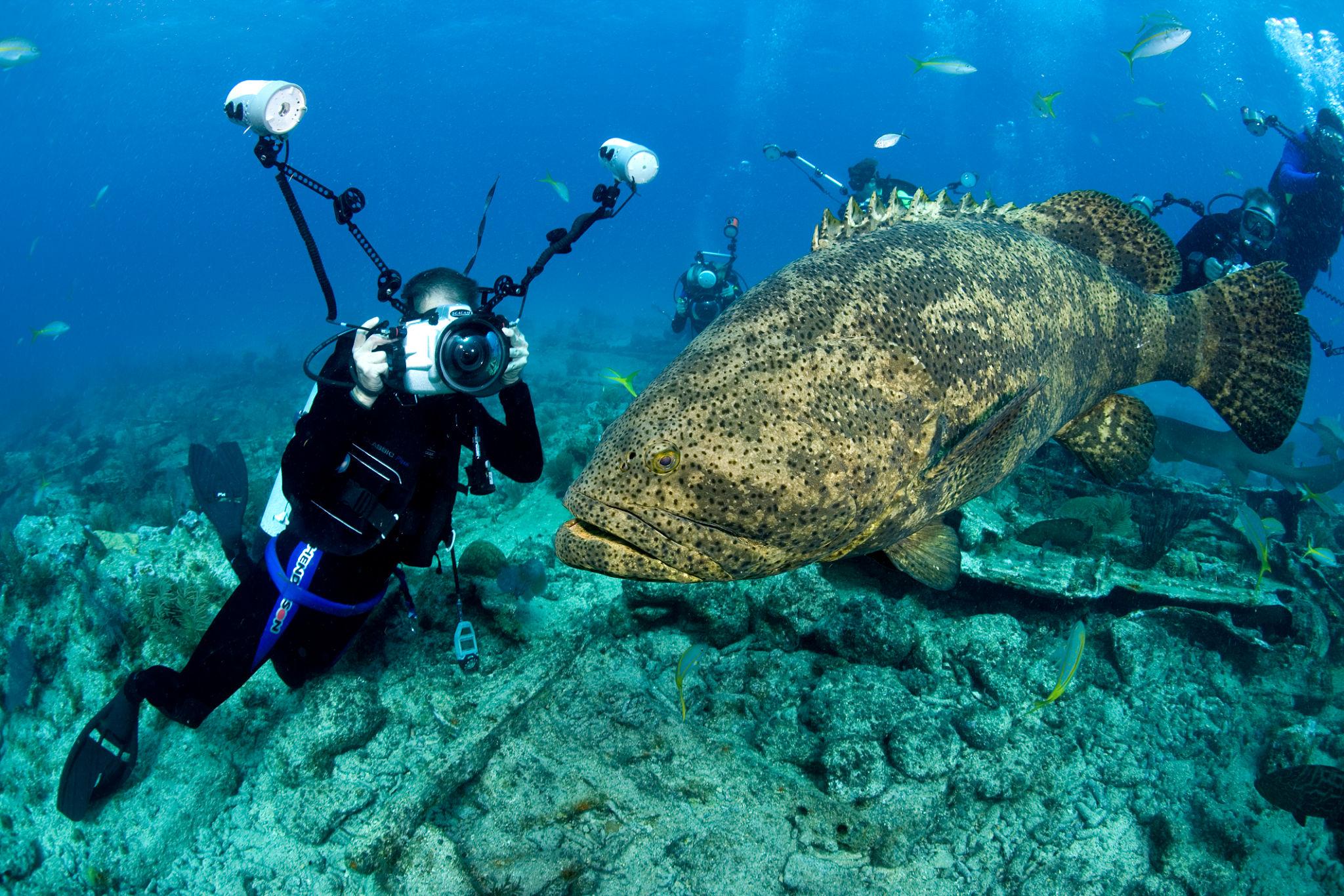
    The goliath grouper is one of the largest reef fish in the world. Despite its already impressive size, it is famous for swallowing prey astonishingly quickly.

    Groupers use a feeding method called suction feeding. When attacking, they rapidly open their mouths, creating a powerful vacuum that pulls prey inward.

    This strategy allows them to consume:

    • Large fish
    • Stingrays
    • Crustaceans
    • Small sharks

    The entire event often lasts less than a second.

    Divers frequently describe watching a grouper inhale a large fish as though it vanished into thin air. The predator’s huge mouth and expandable stomach make these oversized meals possible.


    6. African Rock Pythons and Their Record-Breaking Meals

    While all large pythons are impressive eaters, African rock pythons have earned particular attention for their extraordinary appetite.

    These snakes have been documented consuming prey that includes:

    • Antelope
    • Warthogs
    • Large birds
    • Young crocodiles

    The process may take hours. During feeding, the snake slowly works its jaws around the prey while maintaining its grip using backward-pointing teeth.

    After swallowing a very large meal, the snake’s body may become dramatically enlarged. Digestion can continue for several weeks as powerful stomach acids dissolve even hard skeletal material.

    This ability enables the python to survive long periods without another successful hunt.


    7. The Black Swallower: A Tiny Fish With Giant Ambitions

    Perhaps no animal better represents extreme feeding than the black swallower.

    This deep-sea fish measures only a few inches long, yet it can consume prey several times its own size.

    Scientists have recovered black swallowers containing fish so large that the prey extended far beyond the predator’s body.

    How is this possible?

    The fish possesses:

    • Highly flexible jaws
    • Expandable stomach walls
    • Stretchable skin
    • Loosely connected bones

    When food opportunities arise in the deep ocean, the black swallower takes full advantage, even if the prey appears impossibly oversized.

    Occasionally, the meal is so large that the predator cannot digest it fast enough, illustrating the extreme risks associated with this feeding strategy.


    Why Evolution Favors Oversized Meals

    At first glance, swallowing enormous prey seems dangerous. However, there are significant advantages.

    Energy Efficiency

    Capturing one large meal may provide more energy than hunting many small prey items.

    Scarce Food Environments

    Deep-sea animals often encounter food rarely. Eating a massive meal whenever possible improves survival.

    Reduced Competition

    Animals capable of consuming oversized prey can exploit food sources unavailable to smaller competitors.

    Longer Survival Between Hunts

    Large meals provide energy reserves that may last for weeks or months.

    These benefits help explain why oversized feeding strategies evolved independently in many unrelated animal groups.


    The Risks of Eating Too Much

    While impressive, swallowing huge prey carries serious dangers.

    Some risks include:

    • Choking
    • Digestive failure
    • Increased vulnerability to predators
    • Reduced mobility
    • Internal injuries

    A snake with a giant meal inside may move very slowly. A deep-sea fish that swallows excessive prey may be unable to digest it before decomposition begins.

    Nature rewards bold feeding behavior, but it also imposes strict limits.


    Conclusion

    The ability to swallow prey larger than oneself ranks among the most extraordinary adaptations in the animal kingdom. Whether it is a python engulfing a deer, a frog consuming a snake, a pelican swallowing an oversized fish, or a deep-sea black swallower attempting a meal several times its own size, these animals demonstrate how evolution can produce seemingly impossible solutions to survival challenges.

    Their remarkable jaws, expandable stomachs, and specialized feeding strategies remind us that nature often operates beyond human expectations. Every oversized meal represents millions of years of evolutionary refinement, transforming ordinary predators into some of the most astonishing hunters on Earth.

    The next time you encounter wildlife footage of a snake, fish, or bird swallowing an enormous meal, remember that what appears impossible is simply another example of nature’s endless creativity.


  • When Dinner Looks Impossible: Strange Stories of Animals That Swallow or Eat Things Bigger Than Themselves

    When Dinner Looks Impossible: Strange Stories of Animals That Swallow or Eat Things Bigger Than Themselves

    https://images.openai.com/static-rsc-4/oxN8uySU2of3T3ZQRLNI4a-9WxzGFrfGDWsycvfectJ0X9tn2TFx54pbW-D8z_h1eyPeO2p9LxStyb60_l7kxLDZS6m8aQQw52i5fqMmo7-2tW7h7FZLeFtaqfLoohWwXfRAkQY0MfZ1tPdUtMhw1AmbC92vsAWvY1RlifDWDN7ems-GaIhF7YITphCITPew?purpose=fullsize
    https://images.openai.com/static-rsc-4/qdoDbTNxZ-86G5Dsn_k-Nu1coQzCxVoA4eK0jMdfI37gT8KphfdwC1NAaZVdPTuNAwWxt3KfNAUM-NMxlgGzUEoQIUUxzssrdNdYkIx-k-6s9ovYgRhcn8YrCU9IbEGncRv5e5N5slBtWZiDFAEQ5A9p6LOmiOkf9V5vypxdKTp2Lc_6xHe6_n8N6IBCcsin?purpose=fullsize
    https://images.openai.com/static-rsc-4/5QfHtHYbgf75G0ZMUPcmtoag4oEIRb3gcytjPRF0LsR3VxxoR5a-jYE0QDWhOH8OqzCz__WF7DsXfwS0TjLwEGMN0FOcTTe6rKTQY8HKu1y_lpJrRz-j7PWaXHDZT6g8ktKtaidGWbc-4ovezcIDW91TrWqwimjn2Kn6p-27JuNTN8qiCQ7nHkvEhwmwL9oL?purpose=fullsize

    When Dinner Looks Impossible: Strange Stories of Animals That Swallow or Eat Things Bigger Than Themselves

    Nature rarely follows the rules people expect.

    Most of us assume animals eat things smaller than their mouths and only slightly larger than their stomachs. But in many corners of the world—from rivers and rainforests to deep ocean trenches—animals routinely attempt meals that seem physically impossible.

    Some stretch. Some unhinge. Some dissolve food outside their bodies. Others gamble everything on a single oversized meal.

    These are not mythical creatures or exaggerated fishing stories. They are real animals with remarkable feeding strategies that reveal just how inventive evolution can be.

    1. The Snake That Turns One Meal Into Weeks of Survival

    If there were an award for swallowing impossible meals, snakes would dominate the competition.

    Unlike mammals that chew and reduce food into manageable pieces, many snakes swallow prey whole. Their skulls are not fused in the same way ours are. Flexible ligaments allow each side of the jaw to move independently, creating astonishing expansion.

    Large constrictors and pythons sometimes consume prey that appears wider than their own body.

    Wildlife researchers have documented snakes eating animals such as deer, antelope, pigs, monkeys, and even crocodilians.

    One of the most extraordinary examples involves giant constrictors in South America. A snake may spend hours slowly advancing its mouth over prey, alternately gripping and walking its jaws forward until the entire body disappears inside.

    The process can look impossible because the snake itself appears too small.

    But swallowing is only the beginning.

    After such massive meals, the snake’s metabolism temporarily transforms. Digestion accelerates dramatically. Internal organs become more active, energy use rises, and the animal may remain inactive for days or weeks while processing a single meal.

    For these predators, one enormous dinner can replace dozens of smaller hunts.


    2. The Pelican’s Unexpected Talent for Oversized Meals

    Pelicans are often remembered for their oversized bills and dramatic fishing dives.

    But occasionally, their appetite leads to scenes that seem unbelievable.

    Pelicans have been observed swallowing fish that barely appear capable of fitting inside their throats. In rare cases, they attempt prey so large that it stretches the throat pouch into a balloon-like shape.

    The pouch itself is not the stomach.

    Instead, it acts like a temporary storage and capture net before food is repositioned and swallowed.

    Some pelicans have even attempted birds, unexpectedly large fish, and animals that challenge their physical limits.

    Observers watching from shore often assume the animal has made a mistake.

    Yet pelicans evolved for these moments.

    Their expandable structures allow them to exploit sudden feeding opportunities. In environments where food availability changes quickly, hesitation can mean missing an entire meal.

    Oversized prey is risky—but sometimes worth the gamble.


    3. Deep-Sea Eels and the Art of Extreme Expansion

    Thousands of meters below the ocean surface, food can become painfully scarce.

    That scarcity has produced some of nature’s strangest feeding adaptations.

    Among the most bizarre is the gulper eel.

    This creature appears almost unfinished: a narrow body attached to a gigantic mouth.

    Its head opens into a pouch-like structure capable of engulfing surprisingly large prey relative to body size.

    Unlike fast pursuit predators, gulper eels rely on opportunity.

    When something edible appears in darkness, they may attempt to consume it immediately because another chance might not come soon.

    Their bodies support this strategy through stretchable tissues and unusual digestive capacity.

    To human eyes, these animals seem exaggerated or even fictional.

    But in the deep sea, wasting calories can be more dangerous than attempting a meal that looks absurd.


    4. Frogs That Refuse to Respect Size Limits

    Frogs seem harmless.

    Then you watch one try to eat something nearly its own size.

    Many frog species are opportunistic feeders. Their approach is simple: if it moves and can possibly fit, it might become lunch.

    Large frogs have been observed attempting insects, rodents, birds, smaller frogs, reptiles, and occasionally prey that appears impossible to manage.

    Their mouths open wider than many people expect.

    Unlike careful predators that evaluate each hunt, frogs often react instantly.

    This strategy sometimes produces astonishing outcomes.

    A frog may wrestle oversized prey for several minutes before gradually repositioning and swallowing it.

    Success is not guaranteed.

    But evolutionary pressure rewards animals that maximize calories whenever opportunities appear.

    To a frog, a difficult meal may still be better than waiting for an easier one.


    5. The Starfish That Eats Without Looking Like It’s Eating

    Some animals break the rules in ways that seem impossible until you understand the mechanism.

    Starfish are a perfect example.

    At first glance, they do not appear equipped to eat anything substantial.

    They lack obvious jaws and cannot chase prey.

    Yet some species consume shellfish larger than what their bodies seem capable of handling.

    Their secret is unusual.

    A starfish can use tube feet to slowly pull open shells and then extend part of its stomach outside its body.

    Instead of bringing food inside immediately, digestion begins externally.

    Soft tissue is broken down first, allowing nutrients to be absorbed gradually.

    The prey may actually appear larger than the predator throughout the feeding process.

    It is less dramatic than a snake swallowing a deer—but equally extraordinary.

    Nature sometimes solves problems by changing the rules instead of competing directly.


    6. Crocodiles and the “Anything That Fits” Philosophy

    Crocodiles are famous for powerful bites.

    Less appreciated is how ambitious their eating behavior can become.

    Large crocodilians occasionally tackle prey that appears oversized relative to their body.

    Unlike mammals that chew thoroughly, crocodiles rely on tearing, twisting, and strategic swallowing.

    One unusual behavior is known informally as the death roll.

    By spinning rapidly, they can break apart large prey into manageable sections.

    But when conditions allow, they sometimes swallow surprisingly large portions whole.

    Young crocodiles also demonstrate this instinct early.

    Even juveniles may attempt prey that seems unrealistically large.

    Their feeding decisions reflect a simple reality:

    In ecosystems where competition is intense, passing up food can be more dangerous than attempting too much.


    7. Why Eating Huge Meals Actually Makes Sense

    To people, oversized meals seem reckless.

    In nature, they can be efficient.

    Large meals reduce the number of dangerous hunting attempts.

    Predators spend less energy searching.

    Animals in unpredictable environments gain insurance against future scarcity.

    Evolution rarely rewards elegance.

    It rewards survival.

    That is why so many unrelated species—snakes, birds, fish, amphibians, marine invertebrates, and reptiles—arrived at similar outcomes through completely different methods.

    Some stretch.

    Some dissolve.

    Some store.

    Some simply try and hope.

    The next time you imagine survival in the wild, it is worth remembering:

    Nature is filled with animals that routinely ignore what looks physically possible.

    And sometimes the strangest stories are not about speed, strength, or intelligence.

    Sometimes they begin with a creature looking at something far too large and deciding to eat it anyway.

    Final Thoughts

    Animals that consume prey larger than themselves reveal one of nature’s most fascinating truths: survival often rewards flexibility more than perfection.

    Whether it is a snake patiently unfolding over a massive meal, a pelican stretching the limits of its pouch, or a starfish digesting dinner outside its own body, these stories remind us that life adapts in unexpected ways.

    The wild is not built around what seems reasonable.

    It is built around what works.

  • Strange Stories of Animals That Swallow or Eat Things Larger Than Themselves

    Strange Stories of Animals That Swallow or Eat Things Larger Than Themselves

    Image
    Image
    Image
    Image

    Strange Stories of Animals That Swallow or Eat Things Larger Than Themselves


    Nature’s Impossible Meals

    If humans attempted to eat objects larger than their own heads—or sometimes larger than their entire bodies—it would sound absurd. Yet across forests, oceans, wetlands, and even backyards, certain animals perform feeding feats that appear impossible at first glance.

    Evolution has created remarkable solutions to a simple challenge: survive by eating what others cannot.

    Some animals stretch their jaws. Others unfold hidden body parts. A few temporarily reshape themselves. And in rare cases, they gamble everything on meals so oversized that the process can take hours—or even days.

    These strange feeding stories are not examples of greed. They are highly specialized survival strategies developed over millions of years.

    Here are some of the most surprising animals known for swallowing—or attempting to swallow—things larger than themselves.


    1. The Snake That Turns Into a Living Conveyor Belt

    Image Alt Text:
    Large python slowly swallowing prey much wider than its own body.

    Snakes are probably the most famous oversized eaters on Earth—but even among snakes, some feeding events seem almost unreal.

    Unlike mammals, many snakes have jaws that are not rigidly fused together. Their lower jaws are connected by stretchy ligaments, allowing each side to move independently.

    This means a python doesn’t “unhinge” its jaw—despite the common myth. Instead, it gradually walks its mouth over prey using alternating jaw movements.

    Large pythons and anacondas have been documented swallowing animals that appear dramatically too large to fit inside their bodies:

    • Deer
    • Wild pigs
    • Capybaras
    • Antelope
    • Small crocodilians

    Once swallowed, digestion becomes an intense biological operation. Blood flow shifts toward digestion, metabolism accelerates, and powerful stomach acids begin breaking down bone and tissue.

    For a giant snake, one enormous meal can provide energy for weeks—or even months.

    But oversized meals are risky. If disturbed during digestion, some snakes will regurgitate prey because moving with a massive meal inside becomes difficult.

    Their strategy is simple: eat rarely, but eat big.


    2. Pelicans: Birds With Expandable Grocery Bags

    Image Alt Text:
    Pelican holding an unexpectedly large fish inside its enormous throat pouch.

    Pelicans may look calm and graceful while floating across lakes, but their feeding equipment is extraordinary.

    The huge pouch beneath a pelican’s bill is not for storing food long term—it acts more like a temporary fishing net.

    Pelicans scoop water and prey together, then drain the water before swallowing.

    What surprises many observers is the scale.

    Pelicans have been seen attempting to swallow fish so large they distort the shape of the bird’s neck. In unusual cases, they’ve also tried to consume:

    • Ducks
    • Large amphibians
    • Seabirds
    • Unexpected floating food items

    The pouch can expand dramatically and briefly hold far more volume than seems physically possible.

    Occasionally, ambitious feeding attempts fail when prey proves impossible to position correctly.

    But when successful, the entire process looks less like eating and more like a carefully choreographed swallowing performance.


    3. Deep-Sea Gulper Eels and Their Balloon-Like Mouths

    Image Alt Text:
    Deep sea gulper eel displaying its oversized expandable mouth.

    Thousands of meters below the ocean surface lives an animal that seems designed by imagination rather than evolution.

    The gulper eel has a body that looks relatively ordinary—until it opens its mouth.

    Its mouth expands into a giant flexible pouch capable of engulfing prey much larger than expected.

    Unlike fast predators that chase prey, gulper eels survive in an environment where food can be scarce. Missing opportunities could mean long periods without eating.

    Because of that, they evolved a “take it if you can” strategy.

    Their jaws open wide, and their stomachs stretch enough to process unexpectedly large catches.

    Scientists believe this adaptation allows them to maximize rare encounters in the dark deep ocean.

    When food appears, size becomes less important than opportunity.


    4. Frogs That Ignore the Rules of Proportion

    Image Alt Text:
    Frog attempting to swallow prey nearly the same size as itself.

    Frogs seem harmless until you watch them eat.

    Many species operate with a simple rule:

    If it moves and fits even remotely into the mouth, try.

    Large frogs have been recorded eating:

    • Mice
    • Small birds
    • Other frogs
    • Lizards
    • Snakes

    The swallowing process looks dramatic because frogs often use their eyes to assist feeding.

    Their eyeballs sink downward while swallowing, helping push food toward the throat.

    Some species can stretch enough to consume prey approaching their own body size.

    The meal may leave the frog looking oddly inflated afterward.

    Unlike predators that tear food apart, frogs commit completely: once swallowing starts, there is usually no turning back.


    5. The Anaconda and the Case of the Impossible Shape

    Image Alt Text:
    Green anaconda digesting unusually large prey along a riverbank.

    Stories about giant snakes are common, but anacondas deserve special attention because of where they hunt.

    Water changes everything.

    In rivers and wetlands, buoyancy reduces the difficulty of controlling large prey.

    That allows anacondas to target surprisingly bulky animals.

    Observers have documented anacondas swallowing prey that completely changes the snake’s body profile into enormous rounded forms.

    The process is slow.

    First comes constriction.

    Then positioning.

    Then swallowing begins—a sequence of muscular movements that can continue for hours.

    Afterward, the snake may remain inactive for long periods while digestion transforms one giant meal into stored energy.

    Few animals demonstrate patience and mechanical precision as dramatically.


    6. The Tiny Predator With Giant Ambitions: The Star-Nosed Mole

    Image Alt Text:
    Star nosed mole feeding rapidly underground.

    Not every oversized eater is huge.

    The star-nosed mole is small enough to fit in your hand, yet it consumes astonishing amounts relative to body size.

    Its strange nose contains thousands of sensory receptors that allow it to identify edible targets almost instantly.

    Instead of swallowing gigantic individual prey, it wins through speed.

    Researchers observed feeding decisions occurring in fractions of a second.

    For such a tiny animal, the amount consumed across a day can seem disproportionate to body size.

    Its strategy isn’t stretching.

    It’s overwhelming volume.

    Eat constantly. Stay alive.


    7. When Eating Too Much Becomes Dangerous

    Image Alt Text:
    Wild predator resting after consuming oversized prey.

    Oversized feeding is impressive—but dangerous.

    Animals that attempt giant meals face real risks:

    Mobility Problems

    A full stomach can make escape difficult.

    Digestion Costs

    Processing huge meals demands enormous energy.

    Overheating

    Metabolism may spike dramatically.

    Physical Injury

    Prey can sometimes fight back.

    Suffocation Risks

    Improper swallowing angles can become fatal.

    Nature rewards efficiency—but it does not guarantee success.

    Many dramatic feeding attempts never end well.

    That balance between reward and risk is what makes these stories so remarkable.


    Why Evolution Keeps Producing Extreme Eaters

    Oversized eating evolved repeatedly because it solves one major problem: uncertainty.

    If food appears rarely, eating big becomes efficient.

    If competition is intense, unusual feeding methods create advantages.

    If survival windows are short, maximizing each opportunity matters.

    From deep oceans to tropical wetlands, animals continue proving that our idea of “too big to eat” often doesn’t apply outside the human world.

    The next time you see a snake, a pelican, or even a small frog, remember:

    Some of nature’s strangest creatures survive by attempting meals that seem physically impossible—and sometimes succeeding.


  • Unusual Families in the Wild: Animals That End Up Raising Someone Else’s Young

    Unusual Families in the Wild: Animals That End Up Raising Someone Else’s Young

    Image
    Image
    Image
    Image

    Unusual Families in the Wild: Animals That End Up Raising Someone Else’s Young

    Category

    Wildlife & Nature

    Introduction: When Nature Breaks Its Own Rules

    In the animal kingdom, parenthood is usually a straightforward affair. Mothers and fathers invest enormous effort into raising offspring that carry their genes, ensuring the survival of their family line. This basic principle is one of the foundations of evolution.

    Yet nature is rarely as simple as the textbooks suggest.

    Across the globe, scientists, wildlife photographers, and animal rescuers have documented astonishing cases in which animals raise babies that are not their own. Sometimes the adopted youngster belongs to the same species. In other situations, the foster child comes from an entirely different branch of the animal kingdom.

    These strange relationships challenge traditional ideas about animal behavior. Why would a fox care for an unrelated cub? Why would a cat protect ducklings? Why would a penguin devote energy to feeding a chick that does not belong to it?

    The answers reveal a fascinating world where instinct, circumstance, and social behavior combine to create some of nature’s most unexpected families.


    The Lost and the Found

    Life in the wild is dangerous, especially for newborn animals.

    Storms, predators, accidents, disease, and environmental changes can leave young animals orphaned within days of birth. Under normal circumstances, these youngsters face extremely low chances of survival.

    Occasionally, however, another adult steps into the role of caregiver.

    This substitute parent may provide food, warmth, protection, and guidance. While such arrangements are not common, they occur often enough to attract the attention of researchers.

    In many cases, the foster parent gains no obvious benefit from helping. Yet the behavior persists across numerous species, suggesting that nature’s parenting instincts can be remarkably flexible.


    The Cat That Thought Ducklings Were Kittens

    Domestic cats have produced some of the most surprising adoption stories ever recorded.

    Animal shelters and farms frequently report cases of mother cats caring for ducklings, chicks, rabbits, and squirrels. The adopted babies sleep alongside kittens, receive grooming, and remain under the cat’s protection.

    To human observers, the situation appears unusual because cats are natural predators of small birds and rodents.

    Scientists believe maternal hormones help explain this contradiction. During motherhood, the drive to nurture can become so strong that vulnerable young animals trigger protective responses instead of hunting behavior.

    The result is a family that seems to ignore the normal rules of predator and prey.


    Foster Parenting Among Sea Lions

    Marine mammals are known for complex social behavior, and sea lions provide an intriguing example.

    Researchers studying colonies have observed females nursing pups that were not genetically related to them. In crowded environments where mothers and offspring gather in large numbers, mix-ups can occur.

    Some orphaned pups have survived because unrelated females allowed them to feed alongside their own young.

    While not every sea lion accepts an unrelated pup, these cases demonstrate that caregiving can sometimes extend beyond biological family connections.

    For vulnerable youngsters, such acceptance can mean the difference between life and death.


    The Curious Friendship Between Baboons and Kittens

    Wildlife photographers occasionally capture images that seem almost impossible.

    One of the most remarkable involves baboons interacting gently with kittens or puppies.

    Although not true adoption in every case, some baboons have been observed carrying, grooming, and protecting young domestic animals. Researchers continue studying these interactions to understand their cause.

    Possible explanations include curiosity, social bonding, and nurturing instincts triggered by infant behavior.

    Regardless of the reason, the sight of a powerful primate caring for a tiny kitten remains one of nature’s most unexpected scenes.

    Image
    Image
    Image
    Image
    Image
    Image

    Why Baby Animals Look So Similar

    One reason foster parenting occurs may be surprisingly simple.

    Many baby animals share common physical features:

    • Large eyes
    • Rounded heads
    • Soft facial features
    • Small body size
    • High-pitched sounds

    These characteristics communicate vulnerability.

    Scientists refer to this collection of traits as infantile features, and they appear designed to attract adult attention.

    Because these signals are similar across many species, adults sometimes respond to unrelated youngsters in much the same way they would respond to their own offspring.

    This biological shortcut helps explain why cross-species adoption occasionally occurs.


    Penguins and Their Persistent Parenting Instincts

    Penguins are among the most dedicated parents in the bird world.

    Raising a chick in harsh polar conditions requires tremendous effort. Adults spend weeks protecting eggs, searching for food, and defending young from predators.

    Yet despite these challenges, some penguins care for unrelated chicks.

    Researchers have observed adults attempting to feed orphaned youngsters or adopting chicks after losing their own offspring.

    The behavior demonstrates the strength of parental instincts. Even when a biological connection is absent, the urge to nurture can remain active.


    Foxes That Accept Extra Cubs

    Foxes are generally known as attentive parents, but occasionally their family groups become larger than expected.

    Wildlife biologists have documented cases where female foxes care for cubs that are not their own. Some of these youngsters may have become separated from neighboring dens.

    Because young cubs require constant attention, adoption carries significant costs.

    Nevertheless, the behavior occasionally occurs, adding another example to nature’s growing list of foster families.


    Elephant Calves and Community Protection

    Few species demonstrate cooperative childcare better than elephants.

    Within an elephant herd, calves are surrounded by a network of caregivers. Aunts, sisters, and unrelated females often participate in supervision and protection.

    This support system becomes particularly important when a calf loses its mother.

    Other females frequently help the orphan remain integrated into the herd, reducing the risk of isolation.

    Such cooperation highlights the importance of social bonds in elephant society and provides one of the clearest examples of shared parenting in the wild.


    Birds That Raise Impostors

    Not every foster family forms voluntarily.

    Certain birds have evolved a strategy known as brood parasitism. Species such as cuckoos place their eggs inside the nests of other birds.

    The unsuspecting hosts incubate the eggs and later feed the chicks.

    In many cases, the foster chick grows much larger than the adults caring for it. Despite this obvious difference, the foster parents continue responding to its calls for food.

    This extraordinary deception demonstrates just how powerful parental instincts can be.

    Image
    Image
    Image
    Image
    Image

    The Balance Between Instinct and Choice

    Scientists continue debating how much of foster parenting results from instinct and how much stems from more complex social behavior.

    Hormones clearly play an important role. During periods of motherhood, animals become highly sensitive to signals from young offspring.

    However, social species often display additional flexibility. They form bonds, recognize group members, and cooperate in ways that cannot always be explained by simple instinct alone.

    The truth likely lies somewhere in between.

    Parenting behavior appears to emerge from a combination of biology, environment, and social experience.


    What Foster Families Teach Us About Nature

    Stories of animal adoption are more than charming curiosities.

    They reveal that nature is not governed solely by competition. Cooperation also plays a crucial role in survival.

    By studying foster parenting, researchers gain insight into the evolution of social behavior, communication, and caregiving. These observations help scientists understand how animal societies function and why cooperation can be beneficial.

    Most importantly, they remind us that the natural world is often far more complex than it appears.


    Conclusion

    From cats raising ducklings to sea lions nursing unrelated pups and elephants helping orphaned calves, examples of animals caring for young that are not their own can be found throughout the animal kingdom.

    Some cases arise from powerful maternal instincts. Others result from social cooperation, environmental circumstances, or simple chance. A few remain scientific mysteries.

    Together, these unusual families reveal a remarkable truth: parenting in nature is not always limited by genetics. Sometimes the need to protect and nurture extends beyond bloodlines, creating extraordinary relationships that continue to fascinate researchers and animal lovers alike.

    In a world often defined by survival and competition, these foster families show another side of nature—one built on care, tolerance, and unexpected connections.

  • The Foster Instinct: Amazing Animals That Raise Babies They Never Had

    The Foster Instinct: Amazing Animals That Raise Babies They Never Had

    Image
    Image
    Image
    Image
    Image
    Image
    Image

    The Foster Instinct: Why Some Animals Raise Babies That Aren’t Theirs

    Category

    Wildlife Behavior & Nature

    Introduction: A Mystery Hidden in the Animal World

    Every day in nature, millions of parents devote their lives to protecting and feeding their young. From tiny songbirds gathering insects to elephant mothers guarding calves, parental care is one of the most important behaviors in the animal kingdom.

    Yet scientists have discovered something puzzling.

    Some animals willingly care for babies that do not belong to them.

    Even more surprising, these adopted youngsters are sometimes members of entirely different species. A dog nurses kittens. A monkey protects a puppy. A bird spends months feeding a chick that was secretly placed in its nest by another species.

    These unusual cases challenge one of biology’s most basic assumptions: that parents should focus their efforts on their own offspring.

    Why does this happen? What causes an animal to become responsible for a youngster that carries none of its genes?

    The answers reveal a fascinating side of nature that is often overlooked.


    Parenting Without a Family Connection

    For many years, scientists assumed that animals raised their own offspring because doing so increased the chances of passing genes to future generations.

    While this explanation remains true in most situations, researchers now know that animal parenting is far more flexible than once believed.

    In some species, adults regularly care for unrelated youngsters. In others, unusual circumstances can trigger temporary adoption.

    Sometimes a young animal loses its biological parents. Sometimes a caregiver simply mistakes another baby for its own. In rare situations, powerful nurturing instincts appear to override normal behavior entirely.

    The result is a surprising collection of foster families found throughout the natural world.


    The Gorilla That Became a Guardian

    Gorillas are often remembered for their size and strength, but researchers who study them frequently describe a very different side.

    Gorillas live in highly social groups and form strong bonds with one another. Adults often show remarkable patience toward infants and juveniles.

    In wildlife parks and rehabilitation centers, gorillas have occasionally displayed protective behavior toward smaller animals, including birds and orphaned mammals. Some have allowed vulnerable creatures to remain nearby without showing aggression.

    Although true adoption across species is uncommon, these interactions suggest that caregiving responses can extend beyond immediate family members.

    The image of a powerful gorilla acting as a guardian demonstrates how complex animal behavior can be.


    Dogs: The Champions of Cross-Species Adoption

    If there is one animal famous for accepting unrelated babies, it is the domestic dog.

    Around the world, rescue centers have documented dogs raising kittens, piglets, squirrels, rabbits, and even fox cubs.

    Once maternal instincts are activated, many dogs appear willing to care for almost any helpless newborn.

    The adopted babies receive milk, warmth, protection, and companionship. Some grow up alongside puppies without any sign of conflict.

    Animal behavior experts believe dogs’ social flexibility plays a major role. Thousands of years of domestication may have strengthened their ability to form bonds beyond normal species boundaries.

    Few animals demonstrate the foster instinct as clearly as dogs.


    A Life Saved by the Herd

    For elephant calves, survival depends heavily on family support.

    Unlike many species, elephants raise young within a close-knit social network. Mothers receive assistance from sisters, cousins, and unrelated females.

    When a calf becomes orphaned, these relationships can become lifesaving.

    Researchers have observed herds surrounding vulnerable calves and providing ongoing protection. Older females may guide the youngster, defend it from threats, and help it remain connected to the group.

    This cooperative behavior helps explain why elephants have some of the strongest social structures in the animal kingdom.

    Rather than relying on a single caregiver, the entire herd contributes.

    Image
    Image
    Image
    Image

    The Strange Success of Nest Invaders

    Not every foster family forms by choice.

    Some birds have evolved a strategy that depends entirely on tricking other species into becoming parents.

    Cuckoos are perhaps the best-known example.

    Instead of building nests and raising chicks themselves, female cuckoos place their eggs inside the nests of other birds. The unsuspecting hosts incubate the eggs and later provide food for the chick.

    In many cases, the foster chick grows much larger than the adults caring for it.

    Yet the adoptive parents continue feeding it because its begging calls trigger powerful nurturing responses.

    This strange relationship represents one of nature’s most successful examples of deception.


    Monkeys and Their Unexpected Companions

    Across parts of Asia, wildlife photographers have captured remarkable images of monkeys carrying puppies.

    The behavior has been documented multiple times and continues to intrigue researchers.

    The monkeys groom the puppies, protect them from danger, and sometimes share food.

    Several explanations have been proposed. Puppies may resemble infant monkeys in important ways. Alternatively, young monkeys may simply enjoy social interaction with other animals.

    Whatever the reason, these unusual partnerships demonstrate how flexible social behavior can become.

    They also show that friendship and caregiving are not always restricted by species.


    Penguins in Search of Someone to Protect

    Penguins are known for their dedication to family life.

    However, breeding colonies can be chaotic places. Thousands of birds gather together, creating opportunities for confusion.

    Occasionally, chicks become separated from their parents.

    Researchers have observed adult penguins attempting to care for orphaned chicks or adopting youngsters after losing their own eggs.

    The behavior appears especially common when adults are already experiencing strong parental instincts.

    Even without a biological connection, the desire to protect and nurture remains.


    Capybaras: The Social Specialists

    Capybaras are often called the friendliest animals in the world.

    These large rodents live in social groups and tolerate a remarkable variety of other species. Birds, ducks, monkeys, and small mammals frequently gather around them.

    Female capybaras sometimes participate in communal nursing, allowing multiple youngsters access to care.

    Although not every young animal belongs to them, adults may contribute to group childcare.

    This cooperative approach creates a safer environment for vulnerable offspring and highlights the advantages of social living.


    Why Baby Animals Trigger Protective Responses

    Scientists have identified several features that make babies difficult to ignore.

    Young animals often share:

    • Large eyes
    • Rounded faces
    • Small body size
    • Soft vocalizations
    • Clumsy movement

    These traits communicate vulnerability.

    When adults detect these signals, caregiving instincts may activate automatically.

    Because many species share similar infant characteristics, unrelated babies can sometimes trigger the same response as biological offspring.

    This helps explain why cross-species adoption occasionally occurs.

    Image
    Image
    Image
    Image

    Beyond Instinct: Do Emotions Matter?

    One of the most debated topics in animal science concerns emotions.

    Are animals capable of empathy?

    While researchers avoid making assumptions without evidence, studies increasingly suggest that many species possess sophisticated social awareness.

    Elephants respond to distressed companions. Dolphins assist injured group members. Primates maintain long-term friendships.

    These observations indicate that caregiving may involve more than simple instinct.

    Social relationships and emotional responses could influence how animals treat vulnerable youngsters.

    Although much remains unknown, evidence continues to challenge older views of animal behavior.


    The Evolutionary Value of Helping

    At first glance, caring for unrelated offspring appears costly.

    Food, energy, and protection all require effort.

    However, helping behavior can provide indirect benefits. Social groups become stronger. Young caregivers gain experience. Communities improve their overall survival chances.

    In cooperative species, assisting another youngster may ultimately benefit everyone.

    Evolution often rewards collaboration just as much as competition.


    Conclusion

    The stories of animals raising children that are not their own reveal one of nature’s most fascinating mysteries. From dogs nursing kittens to elephants protecting orphaned calves and penguins adopting lost chicks, foster parenting appears in many forms across the animal kingdom.

    Some cases result from powerful parental instincts. Others emerge through social cooperation or unusual circumstances. A few remain difficult for scientists to explain.

    Together, these remarkable examples show that family in nature is not always defined by genetics. Sometimes it is created through protection, care, and the willingness to help a vulnerable life survive.

    The foster instinct reminds us that the natural world is often far more compassionate—and far more surprising—than we expect.

    SEO Title

    The Foster Instinct: Amazing Animals That Raise Babies They Never Had

    Meta Description

    Discover incredible stories of animals raising babies that are not their own. Learn how dogs, elephants, gorillas, monkeys, penguins, and other species become foster parents.

    Tags

    Animals, Wildlife, Animal Behavior, Nature Facts, Foster Parenting, Animal Adoption, Cross Species Adoption, Wildlife Stories, Amazing Animals, Animal Kingdom, Parenting in Nature, Wildlife Education, Nature Wonders, Rare Animal Behavior

    Featured Image Alt Text

    Gorilla gently watching over a small orphaned animal in a wildlife sanctuary

    Additional Image Alt Texts

    1. Mother dog nursing adopted kittens beside her puppies
    2. Elephant herd protecting a young orphan calf in the savanna
    3. Monkey carrying an adopted puppy through a forest environment
    4. Penguin feeding a foster chick in a crowded colony
    5. Capybara resting among young animals in a social group
    6. Foster bird feeding a cuckoo chick inside a nest
    7. Mixed-species animal family showing unusual parenting behavior
  • Not My Baby, Still My Responsibility: Strange Animal Foster Parents in Nature

    Not My Baby, Still My Responsibility: Strange Animal Foster Parents in Nature

    Image
    Image
    Image
    Image
    Image

    Here’s a completely new article with a fresh angle, new structure, and different examples from previous versions.

    Not My Baby, Still My Responsibility: The Surprising World of Animal Foster Parents

    Category

    Wildlife & Animal Science

    Introduction: The Family Tree with Missing Branches

    When biologists discuss survival in nature, the conversation usually revolves around competition. Animals search for food, defend territory, avoid predators, and invest resources in passing their genes to the next generation.

    That last point seems especially important. From an evolutionary perspective, raising offspring is expensive. It requires energy, time, and constant vigilance. Because of these costs, most scientists once assumed that parental care would be directed almost exclusively toward biological descendants.

    Yet the natural world repeatedly challenges this assumption.

    Across continents and ecosystems, researchers have documented extraordinary cases of animals raising, protecting, feeding, or adopting youngsters that are not their own. Some foster parents belong to the same species as the adopted child. Others belong to completely different species, creating family relationships that appear almost impossible.

    These unusual stories reveal that animal parenting is far more flexible than we once believed. In many situations, the need to nurture can become stronger than the boundaries of genetics.


    The World’s Most Unexpected Babysitters

    Not every foster parent in nature becomes a full-time adoptive mother or father. Some animals simply help care for youngsters temporarily.

    Among many social species, babysitting is surprisingly common.

    Meerkats provide a well-known example. While dominant adults produce most of the offspring, other members of the group often guard, feed, and supervise pups. Youngsters may spend time with several caregivers throughout the day.

    This system allows parents to search for food while knowing their babies remain protected.

    Although the helpers are often relatives, the arrangement demonstrates that childcare in nature is not always limited to biological parents.


    The Lioness That Ignored Her Instincts

    Predators and prey are supposed to remain on opposite sides of nature’s relationship chart.

    Yet wildlife researchers in Africa have occasionally observed lionesses behaving in astonishing ways around antelope calves.

    Instead of hunting them, some lionesses have tolerated their presence, protected them from danger, and allowed them to remain nearby for extended periods.

    These incidents remain rare, but they have fascinated scientists for years.

    One possible explanation involves maternal hormones. A lioness that recently gave birth or lost her cubs may experience nurturing impulses so strong that they temporarily suppress predatory behavior.

    For a brief moment, instinct and biology appear to collide.


    Why Puppies Become Universal Adoptees

    If there were an award for the animal most frequently adopted by other species, puppies would be strong contenders.

    Monkeys, cats, goats, and even birds have been observed interacting with abandoned puppies in unusually protective ways.

    Researchers believe puppies possess a combination of traits that encourage caregiving:

    • Soft vocalizations
    • Large eyes
    • Playful behavior
    • Dependence on adults

    These characteristics resemble those found in many mammal infants.

    As a result, puppies can trigger parental responses in animals that would normally have little reason to interact with them.

    This may explain why stories involving adopted puppies appear in wildlife observations from several countries.


    The Gentle Giants and Their Community Nursery

    Elephants do not rely on a single parent to raise a calf.

    Instead, an entire network of females often contributes to childcare. These helpers assist with protection, guidance, and supervision.

    Young calves benefit from constant attention, while inexperienced females gain valuable parenting practice.

    Researchers have observed orphaned calves receiving support from multiple members of the herd. In some cases, the loss of a mother does not mean complete abandonment because other females step in to help.

    This collective system creates one of the most sophisticated childcare networks in the animal kingdom.

    Image
    Image
    Image
    Image
    Image
    Image

    Penguins That Adopt by Accident

    Penguin colonies are crowded places filled with thousands of adults and chicks.

    In such chaotic environments, mistakes are inevitable.

    A wandering chick may become separated from its parents and approach another adult seeking food or warmth. Surprisingly, some adults respond positively.

    Researchers studying penguins have documented cases where unrelated chicks received care from foster parents.

    Adults that lose their own eggs or chicks may be particularly likely to accept newcomers.

    Although not every adoption succeeds, these incidents reveal how powerful parenting instincts can become.


    The Curious Friendship Between Cats and Birds

    Domestic cats are famous hunters, making certain adoption stories particularly remarkable.

    Animal shelters and farms occasionally report mother cats caring for ducklings, chicks, or small birds. The babies rest beside the cat, follow her movements, and receive protection normally reserved for kittens.

    Scientists believe maternal hormones play an important role in these situations.

    Once a cat enters a caregiving state, vulnerable youngsters may be treated as dependents rather than prey.

    These unusual families often attract widespread attention because they seem to violate the expected relationship between predator and prey.


    Ocean Mothers and Lost Calves

    The oceans contain their own examples of foster care.

    Dolphins and whales live in complex social groups where cooperation is essential. Researchers have documented instances of females assisting calves that are not their biological offspring.

    Some adults help guide young animals through the water, protect them from threats, or allow them to remain close to the group.

    Because studying marine animals is difficult, scientists suspect many examples go unnoticed.

    Nevertheless, available evidence suggests that cooperative caregiving may be more common in the ocean than previously believed.


    Birds That Are Tricked Into Parenthood

    Not every foster relationship develops naturally.

    Some species exploit parental instincts through deception.

    Cuckoos and cowbirds lay eggs in the nests of other birds, leaving foster parents to handle all childcare responsibilities.

    The unsuspecting hosts incubate the eggs, feed the chicks, and protect them from predators.

    Remarkably, the adopted chick often becomes larger than the adults raising it.

    Even so, instinctive feeding responses continue to drive parental care.

    This unusual strategy demonstrates how powerful caregiving instincts can be—and how easily they can be manipulated.


    Capybaras: Nature’s Peacekeepers

    Capybaras have become famous for their ability to coexist peacefully with other animals.

    Birds perch on them. Ducks swim nearby. Small mammals often share their space without conflict.

    Female capybaras frequently participate in communal childcare, helping supervise groups of young animals.

    Their calm social behavior has earned them a reputation as one of the most tolerant species on Earth.

    While true cross-species adoption remains uncommon, capybaras demonstrate how social flexibility can create opportunities for unusual relationships.

    Image
    Image
    Image
    Image
    Image

    What Makes a Baby Look Like a Baby?

    One fascinating reason foster parenting occurs involves the appearance of young animals.

    Many species share features that automatically attract adult attention:

    • Large eyes relative to body size
    • Rounded heads
    • Small noses
    • Soft sounds
    • Clumsy movements

    These characteristics act as biological signals indicating vulnerability.

    Scientists believe they help trigger protective behavior in adults.

    Because these signals appear across many species, they occasionally encourage caregiving toward unrelated youngsters.


    The Evolutionary Advantage of Helping

    At first glance, raising another animal’s offspring seems wasteful.

    Why spend valuable energy on a youngster that does not share your genes?

    The answer depends on the species.

    In social animals, helping others can strengthen group stability. Young helpers gain experience. Communities become more resilient. Orphaned youngsters may eventually contribute to the survival of the group.

    Evolution is not solely about individual success.

    In many cases, cooperation can provide significant long-term benefits.


    A Different View of the Animal Kingdom

    Stories about foster parenting challenge many common assumptions about wildlife.

    Nature is often portrayed as a place of relentless competition. While competition certainly exists, cooperation plays an equally important role.

    Animals form partnerships, share responsibilities, and sometimes care for unrelated young.

    These behaviors reveal a side of the natural world that is often overlooked.

    Rather than viewing animals as simple creatures driven only by instinct, researchers increasingly recognize the complexity of their social lives.


    Conclusion

    The phenomenon of animals raising children that are not their own remains one of the most fascinating subjects in behavioral science. From lionesses protecting antelope calves to dolphins assisting orphaned youngsters and penguins feeding unrelated chicks, examples of foster parenting appear across the natural world.

    Some relationships arise from hormonal instincts. Others develop through social cooperation or unusual circumstances. A few remain difficult to explain.

    Together, they reveal an important truth: family in nature is not always defined by genetics.

    Sometimes, it is defined by care, protection, and the willingness to help a vulnerable young life survive.

  • The Accidental Parents of the Animal Kingdom: When Nature Creates Unexpected Families

    The Accidental Parents of the Animal Kingdom: When Nature Creates Unexpected Families

    Image
    Image
    Image
    Image
    Image
    Image
    Image

    The Accidental Parents of the Animal Kingdom: When Nature Creates Unexpected Families

    Category

    Animals, Wildlife & Nature

    Introduction: Families That Defy Biology

    Imagine walking through a wildlife sanctuary and seeing a dog caring for a tiger cub. Or spotting a baboon carrying a lost puppy as if it were its own child. These scenes sound like stories from a children’s book, yet similar events have occurred in real life.

    The natural world is filled with examples of animals forming families that biology never intended. While most species devote their energy to raising their own offspring, there are extraordinary moments when adults care for babies that are unrelated—or even belong to entirely different species.

    For scientists, these unusual relationships provide valuable clues about animal behavior. For everyone else, they offer a fascinating glimpse into a softer side of nature that often goes unnoticed.

    From birds that become accidental foster parents to mammals that adopt orphaned youngsters, the animal kingdom contains countless examples of unexpected caregiving.


    Nature’s Orphans and Their Unlikely Guardians

    Every year, thousands of young animals lose their parents due to predators, disease, accidents, or environmental disasters.

    In many cases, survival becomes nearly impossible.

    Yet some youngsters receive a second chance when another adult steps in to provide care. This substitute caregiver may not share any genetic connection with the orphan, but it can still provide food, protection, warmth, and guidance.

    Scientists refer to this phenomenon as foster parenting or alloparental care. While relatively uncommon in some species, it appears surprisingly widespread throughout the animal kingdom.


    The Goose That Adopted Ducklings

    One of the most charming examples comes from waterfowl.

    Wildlife photographers have occasionally documented geese caring for ducklings that became separated from their biological parents. The adopted ducklings follow the goose across ponds and wetlands just as they would their natural mother.

    Because young birds instinctively follow the first protective adult they recognize, unusual mixed-species families sometimes develop.

    The goose often responds by defending the ducklings from threats and leading them to feeding areas.

    For the ducklings, the difference between a goose and a duck may matter less than having a dependable guardian.


    Why Puppies Seem to Get Adopted So Often

    Across the world, puppies appear in many stories involving cross-species adoption.

    Monkeys, cats, dogs, and even larger mammals have been observed caring for abandoned puppies. Researchers believe puppies possess several traits that encourage nurturing responses.

    They are vocal, dependent, playful, and display many of the same characteristics seen in infant mammals.

    In parts of Asia, baboons and macaques have repeatedly been observed carrying puppies through their territories. Some share food, groom the puppies, and protect them from danger.

    These relationships sometimes last for months, demonstrating that social bonds can extend beyond species boundaries.


    Elephant “Aunts” and Shared Parenting

    Elephants have one of the most sophisticated childcare systems in the animal kingdom.

    A calf is rarely watched by its mother alone. Instead, a network of females helps supervise and protect the youngster. These helpers are often called allomothers or “aunts.”

    The arrangement benefits everyone involved.

    Young females gain parenting experience, mothers receive support, and calves enjoy constant protection.

    If a calf loses its mother, these relationships can become especially important. Other females frequently provide care and companionship, helping the orphan remain integrated within the herd.

    This collective approach makes elephants one of nature’s most successful examples of cooperative parenting.

    Image
    Image
    Image
    Image
    Image

    Penguins That Refuse to Give Up

    Penguins are famous for their dedication to parenting.

    In crowded breeding colonies, however, mistakes happen. Eggs become separated, chicks wander away, and parents occasionally lose their offspring.

    Researchers have observed adults attempting to care for abandoned chicks even when those chicks are unrelated.

    Some penguins whose own eggs failed to hatch become particularly attentive toward orphaned youngsters.

    This behavior highlights the extraordinary strength of parental instincts. The desire to nurture can remain powerful even when biological connections are absent.


    Wolves and the Pack Mentality

    Unlike many solitary predators, wolves operate as highly cooperative social groups.

    Raising pups is considered a responsibility shared by the entire pack. Older siblings and unrelated adults often contribute by guarding, feeding, and entertaining the young.

    This communal approach increases survival rates and strengthens social bonds.

    Although most pups are related to the adults helping them, the behavior demonstrates how caregiving can extend beyond direct parent-offspring relationships.

    The pack functions as a team rather than a collection of individuals.


    Cats That Rewrite the Rules

    Cats are natural hunters, which makes some adoption stories particularly surprising.

    Animal shelters have reported mother cats accepting baby squirrels, rabbits, ducklings, and even tiny puppies.

    Once maternal instincts are activated, the cat may groom, protect, and cuddle the adopted babies just as she would her own kittens.

    To human observers, these mixed families appear extraordinary because they involve species that would rarely interact peacefully in the wild.

    Yet for the nursing mother, the babies simply represent vulnerable youngsters in need of care.


    Birds That Accidentally Become Foster Parents

    Some bird species spend enormous amounts of time raising chicks that are not their own.

    The most famous example involves cuckoos.

    Female cuckoos secretly place their eggs in another bird’s nest. The unsuspecting host parents incubate the egg and later raise the chick.

    In some cases, the foster chick grows significantly larger than the birds feeding it.

    Even so, the adoptive parents continue delivering food because the chick’s begging behavior activates powerful feeding instincts.

    This remarkable strategy has evolved independently in several bird groups around the world.


    The Role of Baby Signals

    One reason cross-species parenting occurs is that many babies send similar signals.

    These include:

    • High-pitched cries
    • Large eyes
    • Rounded faces
    • Small body size
    • Dependent behavior

    Such characteristics encourage adults to respond with care and protection.

    Scientists sometimes describe these traits as evolutionary signals designed to attract attention from caregivers.

    Because these signals are effective across many species, they occasionally trigger nurturing behavior toward unrelated young animals.

    Image
    Image
    Image
    Image

    Are Animals Capable of Compassion?

    One of the most debated questions in animal behavior research concerns emotions.

    Do animals feel empathy?

    Scientists remain cautious about assigning human emotions to wildlife. However, studies increasingly show that many species possess complex social awareness.

    Elephants comfort distressed companions. Dolphins assist injured group members. Primates maintain long-term friendships.

    While foster parenting may sometimes result from instinct alone, emotional and social factors likely influence behavior as well.

    The answer may differ between species, but evidence suggests that animal social lives are more sophisticated than once believed.


    What These Stories Reveal About Evolution

    At first glance, raising an unrelated youngster seems inefficient.

    Why invest resources in a baby that does not carry your genes?

    The answer depends on the species and situation. Cooperative care can strengthen social groups, improve survival rates, provide parenting experience, and help maintain important relationships.

    Evolution does not always favor selfish behavior. In many cases, cooperation proves just as valuable.

    The existence of foster families demonstrates how flexible survival strategies can become.


    Conclusion

    The animal kingdom is filled with extraordinary examples of creatures raising young that are not their own. From geese guiding ducklings to baboons adopting puppies and elephants helping orphaned calves, these relationships challenge simple ideas about parenting and survival.

    Some arise from instinct. Others develop through social bonds or unusual circumstances. A few remain scientific mysteries.

    What they all share is a reminder that nature is more complex than it first appears. Behind the competition and struggle often associated with the wild lies another story—one of protection, caregiving, and unexpected family connections.

    These accidental parents prove that, sometimes, the strongest bond is not created by birth but by the act of caring itself.