Born Different: 7 Animals With Stunning Color Mutations That Made Them Look Like Another Species


Born Different: 7 Animals With Stunning Color Mutations That Made Them Look Like Another Species
Nature usually follows familiar patterns. Zebras wear black-and-white stripes. Lobsters appear dark green or brown. Penguins arrive in classic tuxedo colors.
But sometimes, nature surprises everyone.
Across the world, a tiny number of animals are born with unusual pigments that transform their appearance completely. Some turn pure white. Others become golden, blue, pink, or nearly black. These color differences can make them look like entirely different species.
Scientists often link these unusual appearances to rare genetic mutations affecting pigment production. While these animals may look magical, their strange colors can bring both advantages and challenges in the wild.
Here are seven remarkable examples of animals born unlike the rest of their species.
1. The White Alligator That Looked Like a Mythical Creature


At first glance, a white alligator barely looks real.
Most alligators develop dark olive skin that helps them hide in muddy water. But a rare genetic condition called leucism reduces normal pigmentation, leaving the animal with pale or nearly white skin.
Unlike complete albinism, leucistic animals may still retain some normal eye coloration.
White alligators face major survival challenges in the wild. Their bright appearance makes camouflage difficult, leaving them easier to spot by predators and prey alike.
Because of this, many documented white alligators live under protected conditions rather than surviving independently in nature.
Image Alt Text: Rare white alligator resting near water with pale scales and light eyes.
2. The Pink Grasshopper That Looks Digitally Edited


Imagine walking through a green field and spotting a bubblegum-pink grasshopper.
It sounds impossible—but pink grasshoppers are real.
Their unusual appearance is often linked to a rare pigment condition called erythrism, which causes excessive red or pink coloration.
While ordinary grasshoppers blend easily into vegetation, pink individuals stand out dramatically.
Scientists believe these unusual insects may appear only once in hundreds of thousands of individuals, making every sighting memorable.
Unfortunately, visibility can also become a disadvantage because camouflage is essential for survival.
Image Alt Text: Bright pink grasshopper sitting on a green leaf in natural sunlight.
3. The Blue Lobster That Defies Ocean Expectations


Blue lobsters have become internet celebrities—but they are genuinely rare.
Most lobsters carry dark shell colors that help them remain hidden along the ocean floor. In rare cases, genetic changes cause an overproduction of certain proteins linked to shell pigmentation.
The result is a brilliant electric-blue shell.
Some estimates suggest blue lobsters appear only once in millions of individuals.
Fishermen occasionally discover them and choose to donate them to aquariums rather than sell them.
Their unusual appearance has helped turn them into symbols of rare natural beauty.
Image Alt Text: Rare blue lobster with vivid shell coloration underwater.
4. The Golden Zebra That Lost Its Signature Stripes


Zebras are famous for one thing: bold black stripes.
But a few rare individuals are born with reduced dark pigmentation, creating pale gold or blond coloring.
These animals still retain stripe patterns—but the colors appear softer and much lighter than usual.
Researchers believe unusual pigment expression during development may alter stripe intensity.
Because zebras depend partly on visual group patterns, scientists continue studying whether these color differences affect social behavior.
To observers, however, they look almost unreal.
Image Alt Text: Rare golden zebra standing in grassland with pale stripe coloration.
5. The Dark Penguin Wearing a Reverse Tuxedo


Penguins are icons of black-and-white contrast.
Yet some are born with melanism, a condition that produces excessive dark pigment.
Instead of white bellies and balanced patterns, these individuals appear dramatically darker.
Scientists have observed melanistic penguins in several species, creating birds that almost look redesigned.
Color changes may influence heat absorption and recognition within colonies, although research continues.
Their appearance reminds us that even one of the world’s most recognizable animals can break its own rules.
Image Alt Text: Dark-colored penguin with unusual black plumage standing among normal penguins.
6. The Snow-White Deer That Became a Local Legend


White deer have inspired legends for centuries.
Many owe their appearance to albinism or leucism—conditions that reduce normal pigment production.
With bright coats and striking appearances, these deer often become local celebrities whenever spotted.
But life can be difficult.
Reduced camouflage and, in some cases, vision sensitivity may create additional survival pressures.
Even so, their graceful appearance continues to fascinate photographers and wildlife enthusiasts.
Image Alt Text: White deer standing quietly inside a forest clearing.
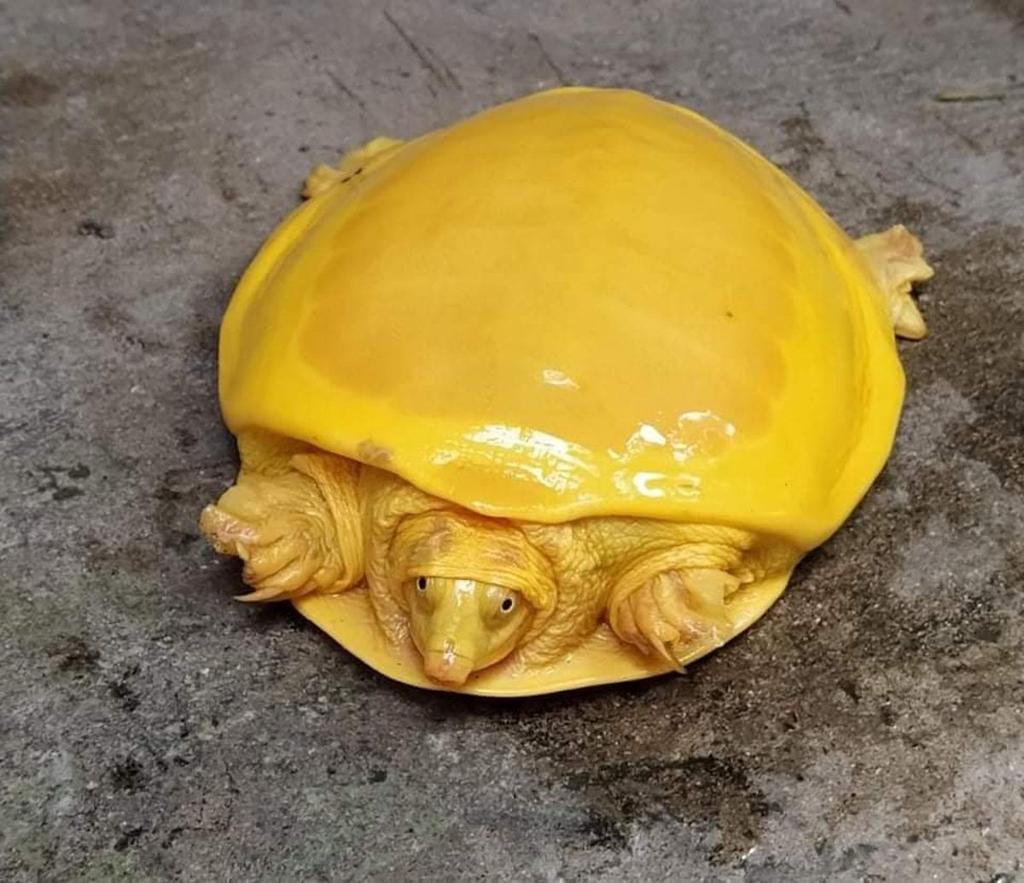
7. The Yellow Turtle That Looked Like It Was Painted


Most turtles rely on muted greens, browns, and dark patterns.
Occasionally, however, a turtle emerges with unusually bright yellow coloring caused by pigment abnormalities.
These turtles immediately attract attention because their shells and skin can appear almost glowing.
Scientists view such cases as valuable opportunities to understand how genes influence coloration across reptile species.
To the public, they simply look unforgettable.
Image Alt Text: Rare yellow turtle displaying unusual bright shell and skin coloration.
Why Do These Strange Colors Happen?
Unusual animal colors usually result from changes in pigment-producing cells or inherited genetic variations.
Some common causes include:
- Albinism – little or no melanin production
- Leucism – reduced overall pigmentation
- Melanism – excess dark pigment
- Erythrism – increased red or pink coloration
- Unique genetic mutations affecting color proteins
While these differences can make animals famous, survival in the wild often becomes harder because camouflage plays such an important role.
Still, every rare-colored animal offers a reminder that nature never repeats itself perfectly.
Sometimes the most extraordinary creatures are not new species at all—they are simply familiar animals born in colors nobody expected.