Nature’s Rarest Wonders: 7 Animals Born With Astonishing Colors That Defy Their Species


Nature’s Rarest Wonders: 7 Animals Born With Astonishing Colors That Defy Their Species
Nature is full of surprises. While most animals are born with colors that help them survive in their environments, some are born with extraordinary appearances that make them look completely different from others of their species.
These unusual colors are often caused by rare genetic mutations that affect pigmentation. In some cases, the mutation removes color entirely. In others, it creates darker, brighter, or even completely unexpected shades.
Although these animals may appear magical, their unique coloration can make life more difficult. They often struggle to camouflage themselves, avoid predators, or find mates.
Here are seven fascinating examples of animals born with colors so unusual that they seem almost unreal.
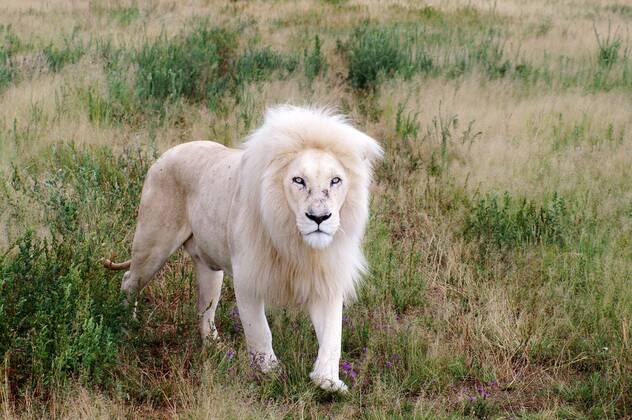
1. The White Lion: A Ghost of the Savannah
Lions are normally golden-brown, allowing them to blend into dry grasslands while hunting.
However, a rare genetic condition sometimes produces white lions.
Unlike albino animals, white lions still have normal eye and skin pigmentation. Their pale appearance is caused by a recessive gene known as leucism, which reduces pigment in the fur.
White lions are incredibly rare in the wild. Their bright coats make camouflage difficult, especially during hunts.
Despite these challenges, white lions remain among the most beautiful and mysterious animals ever documented.
Many people mistake them for mythical creatures when they first see photographs.
2. The Pink Grasshopper That Looks Like a Toy
One of the strangest color mutations ever recorded occurs in grasshoppers.
While most grasshoppers are green or brown, a tiny percentage are born bright pink.
Scientists believe the unusual color results from a genetic condition called erythrism, which causes excessive red pigmentation.
Pink grasshoppers are extremely rare, with some estimates suggesting only one in several hundred thousand develops this coloration.
Because they stand out dramatically against vegetation, they are easier for birds and predators to spot.
Even so, every time a pink grasshopper is discovered, photographs quickly spread across the internet because of its incredible appearance.
3. The Black Penguin That Shocked Researchers
Penguins are famous for their black-and-white coloring.
Occasionally, however, a rare condition called melanism causes some penguins to develop unusually dark feathers.
Instead of displaying the classic tuxedo appearance, melanistic penguins may appear almost entirely black.
Wildlife researchers have documented a small number of these unusual birds in Antarctica and South America.
The condition occurs when the body produces excessive amounts of melanin, the pigment responsible for dark coloration.
These rare penguins often attract attention from both scientists and wildlife photographers due to their extraordinary appearance.
4. The White Giraffe That Became a Legend
Few animals have attracted as much global attention as the rare white giraffes discovered in East Africa.
Their pale appearance is caused by leucism, a genetic condition that reduces skin pigmentation while maintaining normal eye color.
Unlike ordinary giraffes, these animals appear almost completely white.
When one of these giraffes was first photographed, many people believed the images had been digitally altered.
However, the animals were real.
Conservationists reported several sightings over the years, turning the white giraffe into an international wildlife sensation.
Their unusual appearance made them easy to recognize, but unfortunately, it also made them vulnerable to human threats.
5. The Golden Zebra That Looks Nothing Like a Zebra
Zebras are known worldwide for their distinctive black-and-white stripes.
Yet rare genetic mutations can dramatically alter this familiar pattern.
A condition known as amelanism reduces dark pigmentation, creating zebras with golden-brown stripes instead of black ones.
The result is a striking animal that appears almost golden under sunlight.
These rare zebras have been observed in parts of Africa and occasionally in wildlife reserves.
Researchers believe the mutation is extremely uncommon.
To many observers, golden zebras look more like a completely different species than a variation of an ordinary zebra.
6. The Albino Deer That Seems Almost Magical
White deer have fascinated people for centuries.
Legends and folklore often describe them as symbols of luck, mystery, or spiritual significance.
In reality, albino deer owe their appearance to a genetic mutation that prevents the production of melanin.
Unlike leucistic animals, albino deer typically have pink eyes and pink noses.
Because their coloration makes camouflage difficult, they face greater risks from predators.
Despite these challenges, sightings of albino deer continue to captivate wildlife enthusiasts around the world.
Many communities even consider them local treasures.
7. The Bright Orange Lobster That Defied the Odds
Most lobsters are dark green, brown, or bluish while alive.
A bright orange lobster is extraordinarily rare.
Scientists estimate the odds of finding one may be as low as one in 30 million.
The unusual coloration results from a genetic mutation that alters pigment production.
Because orange lobsters are highly visible, they would struggle to hide from predators in the wild.
Fortunately, many discovered orange lobsters are transferred to aquariums rather than being sold for food.
Their vibrant color makes them instant attractions wherever they are displayed.
Why Do These Strange Colors Happen?
Most unusual animal colors result from genetic mutations affecting pigmentation.
Some of the most common conditions include:
• Albinism – Complete absence of melanin, producing white skin, fur, feathers, and often pink eyes.
• Leucism – Partial loss of pigmentation while maintaining normal eye color.
• Melanism – Excessive dark pigmentation, causing animals to appear much darker than normal.
• Erythrism – Increased red pigmentation, producing reddish or pink coloration.
These conditions are usually rare and occur naturally in wild populations.
The Challenges of Being Different
Although these animals look extraordinary, their unusual appearance often creates survival challenges.
Camouflage is one of the most important defenses in nature.
Animals with unusual colors frequently stand out against their surroundings.
This makes them easier for predators to locate.
In some species, unusual coloration can also affect social interactions and mating opportunities.
However, many of these animals survive and thrive despite the challenges they face.
Their existence demonstrates the incredible diversity of life on Earth.
Nature’s Living Masterpieces
From white lions and white giraffes to pink grasshoppers and orange lobsters, these remarkable animals remind us that nature is capable of producing astonishing surprises.
Every rare color mutation tells a unique story about genetics, evolution, and survival.
Although many of these animals are seen only rarely, their photographs continue to amaze millions of people around the world.
They serve as living reminders that even in a world filled with familiar creatures, nature still has the power to surprise us.
And sometimes, the rarest wonders are the ones that look completely different from everyone else around them.
Additional Images for the Article
Image 1 – White Lion


Alt Text: Rare white lion displaying an unusual genetic color variation.
Image 2 – Pink Grasshopper


Alt Text: Rare pink grasshopper caused by a genetic pigmentation mutation.
Image 3 – Black Penguin


Alt Text: Unusual melanistic penguin with mostly black feathers.
Image 4 – White Giraffe


Alt Text: Extremely rare white giraffe standing in the African savannah.
Image 5 – Golden Zebra


Alt Text: Rare golden zebra with brownish stripes instead of black.
Image 6 – Albino Deer


Alt Text: Albino deer with white fur and pink eyes in a forest.
Image 7 – Orange Lobster


Alt Text: Extremely rare orange lobster caused by a genetic mutation.