

Not Photoshop: 7 Animals Born in Colors So Strange Scientists Had to Look Twice
If someone showed you an orange penguin or a black flamingo, you might assume the image had been edited.
But nature occasionally produces animals with colors so unusual that even researchers stop and stare.
Most species develop colors that help them survive—camouflage, warning signals, temperature control, or attracting mates. Yet every so often, genetics creates something unexpected.
These animals are not new species.
They are simply extraordinary versions of familiar ones.
Here are seven real examples of animals born with colors that made them look almost impossible.
1. The Orange Penguin That Shocked Wildlife Photographers
Penguins are famous for their black-and-white appearance.
That’s why photographers were stunned when an unusually orange-colored penguin appeared.
Scientists believe rare pigment abnormalities can reduce darker feather colors and create lighter golden or orange tones.
The result looked less like a penguin and more like a tropical bird.
Alt Text: Rare orange-colored penguin standing among ordinary penguins.
2. The White Crow That Lost Its Darkness
Crows are symbols of glossy black feathers.
But occasionally, a crow appears almost completely white.
This unusual appearance often results from leucism—a condition that reduces pigment while preserving normal eye color.
White crows attract enormous attention because they break one of nature’s most recognizable color patterns.
Alt Text: Rare white crow perched outdoors with pale feathers.
3. The Golden Turtle That Looked Metallic
Most turtles disappear into mud, rocks, and vegetation.
Then there are the rare yellow or golden individuals.
Their shells can appear bright enough to look painted.
Researchers study these rare color changes to better understand reptile pigmentation.
Alt Text: Golden-colored turtle with unusual bright shell.
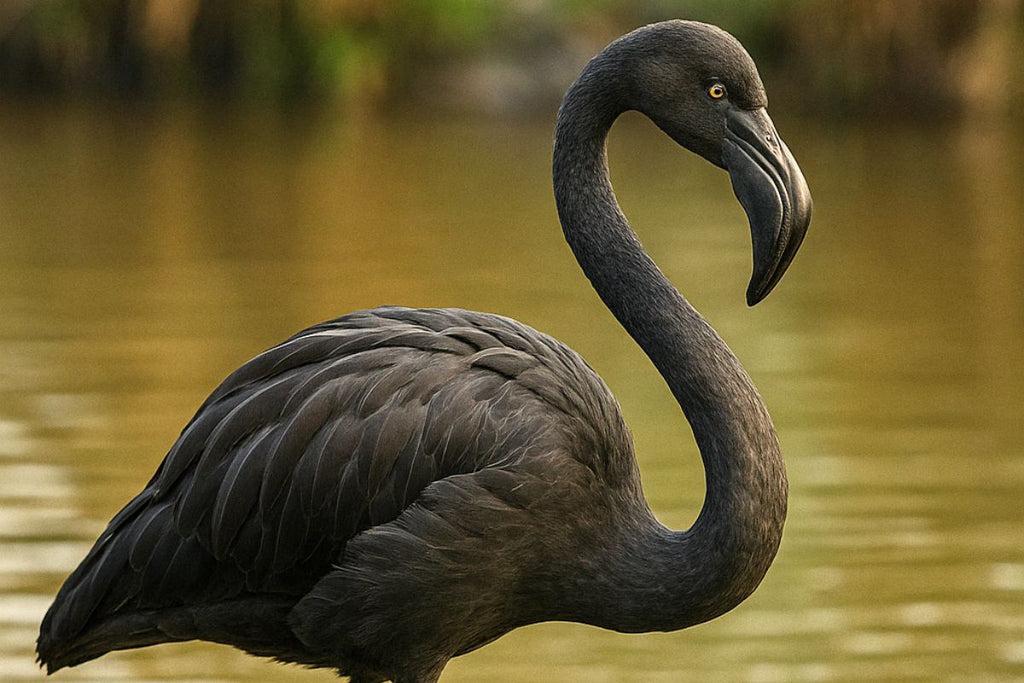
4. The Nearly Black Flamingo
Flamingos are famous for pink feathers.
A black flamingo sounds impossible.
Yet rare individuals with unusually dark pigment have been documented.
The contrast creates one of the strangest sights in bird watching—a bird known for brightness appearing almost shadow-colored.
Alt Text: Rare dark flamingo standing among pink flamingos.
5. The White Moose That Became a Legend
Moose are usually dark brown and blend into forests.
But rare white moose can appear almost glowing between trees.
Unlike albino animals, many retain normal eyes and are believed to carry reduced pigmentation rather than complete pigment loss.
People who see one often describe the experience as unforgettable.
Alt Text: Rare white moose walking through woodland.
6. The Yellow Cobra That Looks Unreal
Cobras usually rely on darker colors for protection and concealment.
Occasionally, rare yellow individuals appear because of unusual genetic traits.
Their bright color transforms one of the world’s most recognizable snakes into something that seems almost fictional.
Alt Text: Yellow cobra displaying unusual bright coloration.
7. The Red Banana Slug
Slugs may not sound exciting—until one appears bright red.
Some banana slug color variations develop intense orange or red shades that stand out dramatically against forest floors.
These strange colors remind us that unusual pigmentation is not limited to large or famous animals.
Alt Text: Bright red banana slug moving across a forest surface.
Why Does Nature Create These Color Surprises?
Color mutations usually happen because pigment-producing cells behave differently during development.
These changes can create animals that are:
• Lighter than normal
• Darker than normal
• More colorful than expected
• Completely unlike their own species
Many unusual color variations reduce camouflage, making survival harder.
But for people lucky enough to see them, they become unforgettable reminders that nature still creates surprises no one expects.
Sometimes the rarest animal is not the rarest species—
it is simply the wrong color..