Not Photoshop: 7 Animals Born in Colors So Strange Scientists Had to Look Twice
If someone showed you an orange penguin or a black flamingo, you might assume the image had been edited.
But nature occasionally produces animals with colors so unusual that even researchers stop and stare.
Most species develop colors that help them survive—camouflage, warning signals, temperature control, or attracting mates. Yet every so often, genetics creates something unexpected.
These animals are not new species.
They are simply extraordinary versions of familiar ones.
Here are seven real examples of animals born with colors that made them look almost impossible.
1. The Orange Penguin That Shocked Wildlife Photographers
Penguins are famous for their black-and-white appearance.
That’s why photographers were stunned when an unusually orange-colored penguin appeared.
Scientists believe rare pigment abnormalities can reduce darker feather colors and create lighter golden or orange tones.
The result looked less like a penguin and more like a tropical bird.
Alt Text: Rare orange-colored penguin standing among ordinary penguins.
2. The White Crow That Lost Its Darkness
Crows are symbols of glossy black feathers.
But occasionally, a crow appears almost completely white.
This unusual appearance often results from leucism—a condition that reduces pigment while preserving normal eye color.
White crows attract enormous attention because they break one of nature’s most recognizable color patterns.
Alt Text: Rare white crow perched outdoors with pale feathers.
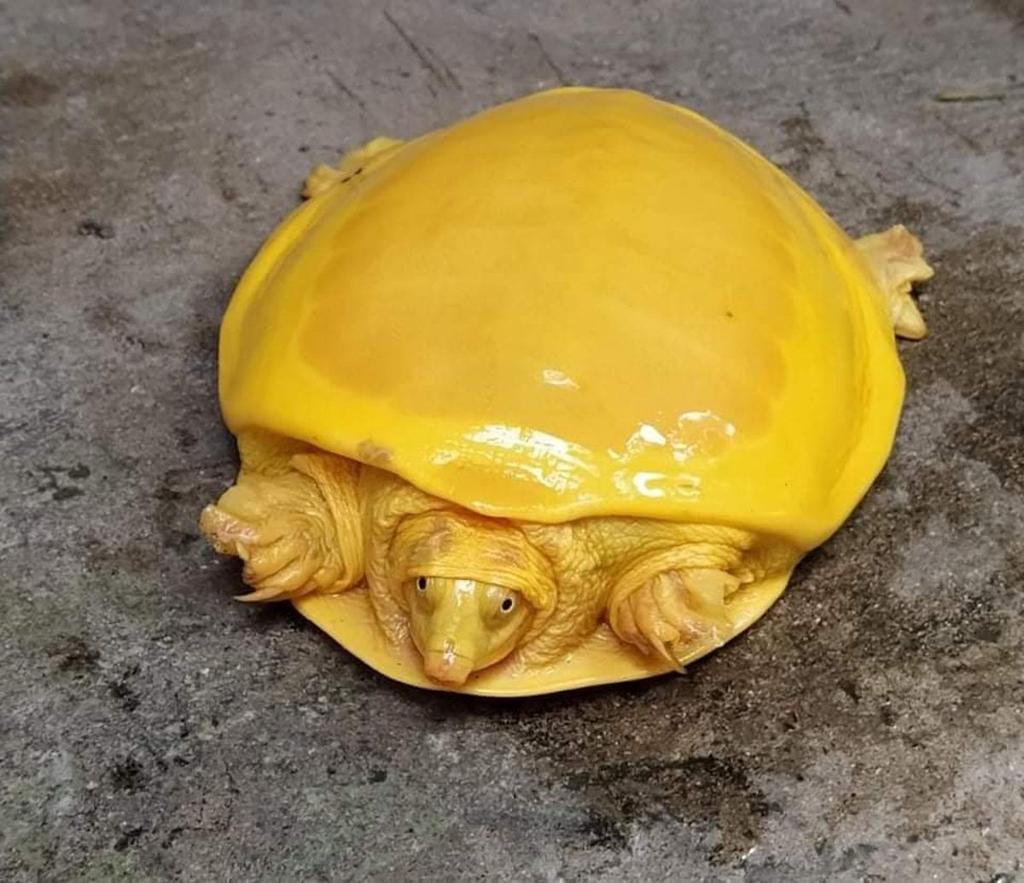
3. The Golden Turtle That Looked Metallic
Most turtles disappear into mud, rocks, and vegetation.
Then there are the rare yellow or golden individuals.
Their shells can appear bright enough to look painted.
Researchers study these rare color changes to better understand reptile pigmentation.
Alt Text: Golden-colored turtle with unusual bright shell.
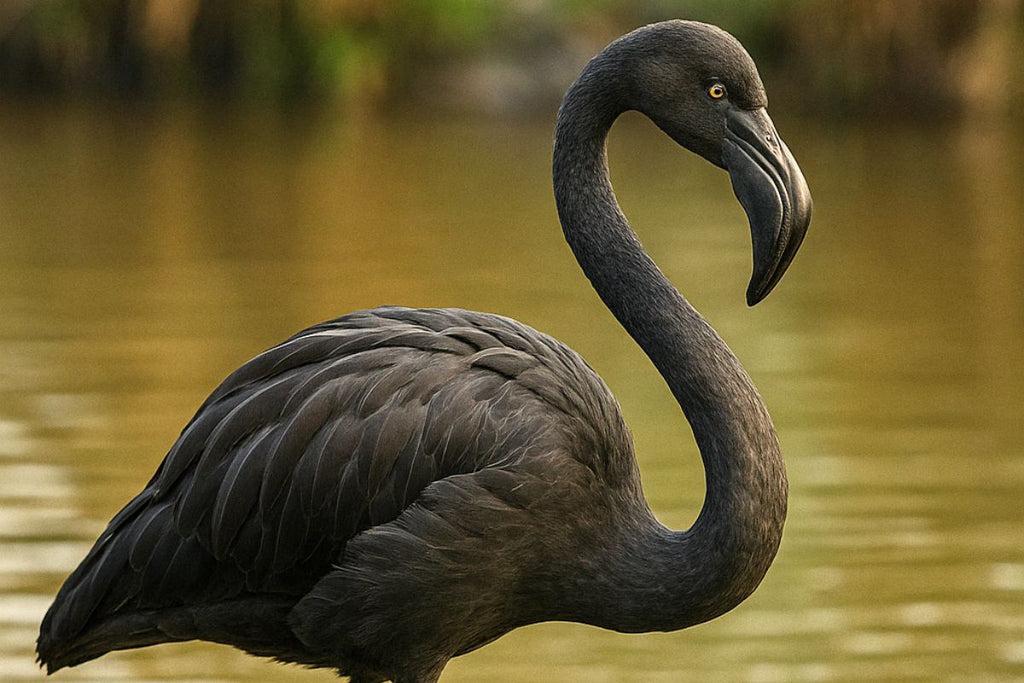
4. The Nearly Black Flamingo
Flamingos are famous for pink feathers.
A black flamingo sounds impossible.
Yet rare individuals with unusually dark pigment have been documented.
The contrast creates one of the strangest sights in bird watching—a bird known for brightness appearing almost shadow-colored.
Alt Text: Rare dark flamingo standing among pink flamingos.
5. The White Moose That Became a Legend
Moose are usually dark brown and blend into forests.
But rare white moose can appear almost glowing between trees.
Unlike albino animals, many retain normal eyes and are believed to carry reduced pigmentation rather than complete pigment loss.
People who see one often describe the experience as unforgettable.
Alt Text: Rare white moose walking through woodland.
6. The Yellow Cobra That Looks Unreal
Cobras usually rely on darker colors for protection and concealment.
Occasionally, rare yellow individuals appear because of unusual genetic traits.
Their bright color transforms one of the world’s most recognizable snakes into something that seems almost fictional.
Alt Text: Yellow cobra displaying unusual bright coloration.
7. The Red Banana Slug
Slugs may not sound exciting—until one appears bright red.
Some banana slug color variations develop intense orange or red shades that stand out dramatically against forest floors.
These strange colors remind us that unusual pigmentation is not limited to large or famous animals.
Alt Text: Bright red banana slug moving across a forest surface.
Why Does Nature Create These Color Surprises?
Color mutations usually happen because pigment-producing cells behave differently during development.
These changes can create animals that are:
• Lighter than normal • Darker than normal • More colorful than expected • Completely unlike their own species
Many unusual color variations reduce camouflage, making survival harder.
But for people lucky enough to see them, they become unforgettable reminders that nature still creates surprises no one expects.
Sometimes the rarest animal is not the rarest species—
Born Different: 7 Animals With Stunning Color Mutations That Made Them Look Like Another Species
Born Different: 7 Animals With Stunning Color Mutations That Made Them Look Like Another Species
Nature usually follows familiar patterns. Zebras wear black-and-white stripes. Lobsters appear dark green or brown. Penguins arrive in classic tuxedo colors.
But sometimes, nature surprises everyone.
Across the world, a tiny number of animals are born with unusual pigments that transform their appearance completely. Some turn pure white. Others become golden, blue, pink, or nearly black. These color differences can make them look like entirely different species.
Scientists often link these unusual appearances to rare genetic mutations affecting pigment production. While these animals may look magical, their strange colors can bring both advantages and challenges in the wild.
Here are seven remarkable examples of animals born unlike the rest of their species.
1. The White Alligator That Looked Like a Mythical Creature
At first glance, a white alligator barely looks real.
Most alligators develop dark olive skin that helps them hide in muddy water. But a rare genetic condition called leucism reduces normal pigmentation, leaving the animal with pale or nearly white skin.
Unlike complete albinism, leucistic animals may still retain some normal eye coloration.
White alligators face major survival challenges in the wild. Their bright appearance makes camouflage difficult, leaving them easier to spot by predators and prey alike.
Because of this, many documented white alligators live under protected conditions rather than surviving independently in nature.
Image Alt Text: Rare white alligator resting near water with pale scales and light eyes.
2. The Pink Grasshopper That Looks Digitally Edited
Imagine walking through a green field and spotting a bubblegum-pink grasshopper.
It sounds impossible—but pink grasshoppers are real.
Their unusual appearance is often linked to a rare pigment condition called erythrism, which causes excessive red or pink coloration.
While ordinary grasshoppers blend easily into vegetation, pink individuals stand out dramatically.
Scientists believe these unusual insects may appear only once in hundreds of thousands of individuals, making every sighting memorable.
Unfortunately, visibility can also become a disadvantage because camouflage is essential for survival.
Image Alt Text: Bright pink grasshopper sitting on a green leaf in natural sunlight.
3. The Blue Lobster That Defies Ocean Expectations
Blue lobsters have become internet celebrities—but they are genuinely rare.
Most lobsters carry dark shell colors that help them remain hidden along the ocean floor. In rare cases, genetic changes cause an overproduction of certain proteins linked to shell pigmentation.
The result is a brilliant electric-blue shell.
Some estimates suggest blue lobsters appear only once in millions of individuals.
Fishermen occasionally discover them and choose to donate them to aquariums rather than sell them.
Their unusual appearance has helped turn them into symbols of rare natural beauty.
Image Alt Text: Rare blue lobster with vivid shell coloration underwater.
4. The Golden Zebra That Lost Its Signature Stripes
Zebras are famous for one thing: bold black stripes.
But a few rare individuals are born with reduced dark pigmentation, creating pale gold or blond coloring.
These animals still retain stripe patterns—but the colors appear softer and much lighter than usual.
Researchers believe unusual pigment expression during development may alter stripe intensity.
Because zebras depend partly on visual group patterns, scientists continue studying whether these color differences affect social behavior.
To observers, however, they look almost unreal.
Image Alt Text: Rare golden zebra standing in grassland with pale stripe coloration.
5. The Dark Penguin Wearing a Reverse Tuxedo
Penguins are icons of black-and-white contrast.
Yet some are born with melanism, a condition that produces excessive dark pigment.
Instead of white bellies and balanced patterns, these individuals appear dramatically darker.
Scientists have observed melanistic penguins in several species, creating birds that almost look redesigned.
Color changes may influence heat absorption and recognition within colonies, although research continues.
Their appearance reminds us that even one of the world’s most recognizable animals can break its own rules.
Image Alt Text: Dark-colored penguin with unusual black plumage standing among normal penguins.
6. The Snow-White Deer That Became a Local Legend
White deer have inspired legends for centuries.
Many owe their appearance to albinism or leucism—conditions that reduce normal pigment production.
With bright coats and striking appearances, these deer often become local celebrities whenever spotted.
But life can be difficult.
Reduced camouflage and, in some cases, vision sensitivity may create additional survival pressures.
Even so, their graceful appearance continues to fascinate photographers and wildlife enthusiasts.
Image Alt Text: White deer standing quietly inside a forest clearing.
7. The Yellow Turtle That Looked Like It Was Painted
Most turtles rely on muted greens, browns, and dark patterns.
Occasionally, however, a turtle emerges with unusually bright yellow coloring caused by pigment abnormalities.
These turtles immediately attract attention because their shells and skin can appear almost glowing.
Scientists view such cases as valuable opportunities to understand how genes influence coloration across reptile species.
To the public, they simply look unforgettable.
Image Alt Text: Rare yellow turtle displaying unusual bright shell and skin coloration.
Why Do These Strange Colors Happen?
Unusual animal colors usually result from changes in pigment-producing cells or inherited genetic variations.
Some common causes include:
Albinism – little or no melanin production
Leucism – reduced overall pigmentation
Melanism – excess dark pigment
Erythrism – increased red or pink coloration
Unique genetic mutations affecting color proteins
While these differences can make animals famous, survival in the wild often becomes harder because camouflage plays such an important role.
Still, every rare-colored animal offers a reminder that nature never repeats itself perfectly.
Sometimes the most extraordinary creatures are not new species at all—they are simply familiar animals born in colors nobody expected.
Nature’s Rarest Wonders: 7 Animals Born With Astonishing Colors That Defy Their Species
Nature’s Rarest Wonders: 7 Animals Born With Astonishing Colors That Defy Their Species
Nature is full of surprises. While most animals are born with colors that help them survive in their environments, some are born with extraordinary appearances that make them look completely different from others of their species.
These unusual colors are often caused by rare genetic mutations that affect pigmentation. In some cases, the mutation removes color entirely. In others, it creates darker, brighter, or even completely unexpected shades.
Although these animals may appear magical, their unique coloration can make life more difficult. They often struggle to camouflage themselves, avoid predators, or find mates.
Here are seven fascinating examples of animals born with colors so unusual that they seem almost unreal.
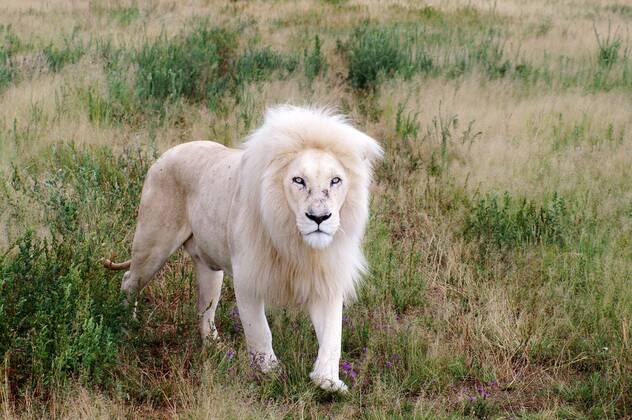
1. The White Lion: A Ghost of the Savannah
Lions are normally golden-brown, allowing them to blend into dry grasslands while hunting.
However, a rare genetic condition sometimes produces white lions.
Unlike albino animals, white lions still have normal eye and skin pigmentation. Their pale appearance is caused by a recessive gene known as leucism, which reduces pigment in the fur.
White lions are incredibly rare in the wild. Their bright coats make camouflage difficult, especially during hunts.
Despite these challenges, white lions remain among the most beautiful and mysterious animals ever documented.
Many people mistake them for mythical creatures when they first see photographs.
2. The Pink Grasshopper That Looks Like a Toy
One of the strangest color mutations ever recorded occurs in grasshoppers.
While most grasshoppers are green or brown, a tiny percentage are born bright pink.
Scientists believe the unusual color results from a genetic condition called erythrism, which causes excessive red pigmentation.
Pink grasshoppers are extremely rare, with some estimates suggesting only one in several hundred thousand develops this coloration.
Because they stand out dramatically against vegetation, they are easier for birds and predators to spot.
Even so, every time a pink grasshopper is discovered, photographs quickly spread across the internet because of its incredible appearance.
3. The Black Penguin That Shocked Researchers
Penguins are famous for their black-and-white coloring.
Occasionally, however, a rare condition called melanism causes some penguins to develop unusually dark feathers.
Instead of displaying the classic tuxedo appearance, melanistic penguins may appear almost entirely black.
Wildlife researchers have documented a small number of these unusual birds in Antarctica and South America.
The condition occurs when the body produces excessive amounts of melanin, the pigment responsible for dark coloration.
These rare penguins often attract attention from both scientists and wildlife photographers due to their extraordinary appearance.
4. The White Giraffe That Became a Legend
Few animals have attracted as much global attention as the rare white giraffes discovered in East Africa.
Their pale appearance is caused by leucism, a genetic condition that reduces skin pigmentation while maintaining normal eye color.
Unlike ordinary giraffes, these animals appear almost completely white.
When one of these giraffes was first photographed, many people believed the images had been digitally altered.
However, the animals were real.
Conservationists reported several sightings over the years, turning the white giraffe into an international wildlife sensation.
Their unusual appearance made them easy to recognize, but unfortunately, it also made them vulnerable to human threats.
5. The Golden Zebra That Looks Nothing Like a Zebra
Zebras are known worldwide for their distinctive black-and-white stripes.
Yet rare genetic mutations can dramatically alter this familiar pattern.
A condition known as amelanism reduces dark pigmentation, creating zebras with golden-brown stripes instead of black ones.
The result is a striking animal that appears almost golden under sunlight.
These rare zebras have been observed in parts of Africa and occasionally in wildlife reserves.
Researchers believe the mutation is extremely uncommon.
To many observers, golden zebras look more like a completely different species than a variation of an ordinary zebra.
6. The Albino Deer That Seems Almost Magical
White deer have fascinated people for centuries.
Legends and folklore often describe them as symbols of luck, mystery, or spiritual significance.
In reality, albino deer owe their appearance to a genetic mutation that prevents the production of melanin.
Unlike leucistic animals, albino deer typically have pink eyes and pink noses.
Because their coloration makes camouflage difficult, they face greater risks from predators.
Despite these challenges, sightings of albino deer continue to captivate wildlife enthusiasts around the world.
Many communities even consider them local treasures.
7. The Bright Orange Lobster That Defied the Odds
Most lobsters are dark green, brown, or bluish while alive.
A bright orange lobster is extraordinarily rare.
Scientists estimate the odds of finding one may be as low as one in 30 million.
The unusual coloration results from a genetic mutation that alters pigment production.
Because orange lobsters are highly visible, they would struggle to hide from predators in the wild.
Fortunately, many discovered orange lobsters are transferred to aquariums rather than being sold for food.
Their vibrant color makes them instant attractions wherever they are displayed.
Why Do These Strange Colors Happen?
Most unusual animal colors result from genetic mutations affecting pigmentation.
Some of the most common conditions include:
• Albinism – Complete absence of melanin, producing white skin, fur, feathers, and often pink eyes.
• Leucism – Partial loss of pigmentation while maintaining normal eye color.
• Melanism – Excessive dark pigmentation, causing animals to appear much darker than normal.
• Erythrism – Increased red pigmentation, producing reddish or pink coloration.
These conditions are usually rare and occur naturally in wild populations.
The Challenges of Being Different
Although these animals look extraordinary, their unusual appearance often creates survival challenges.
Camouflage is one of the most important defenses in nature.
Animals with unusual colors frequently stand out against their surroundings.
This makes them easier for predators to locate.
In some species, unusual coloration can also affect social interactions and mating opportunities.
However, many of these animals survive and thrive despite the challenges they face.
Their existence demonstrates the incredible diversity of life on Earth.
Nature’s Living Masterpieces
From white lions and white giraffes to pink grasshoppers and orange lobsters, these remarkable animals remind us that nature is capable of producing astonishing surprises.
Every rare color mutation tells a unique story about genetics, evolution, and survival.
Although many of these animals are seen only rarely, their photographs continue to amaze millions of people around the world.
They serve as living reminders that even in a world filled with familiar creatures, nature still has the power to surprise us.
And sometimes, the rarest wonders are the ones that look completely different from everyone else around them.
Additional Images for the Article
Image 1 – White Lion
Alt Text: Rare white lion displaying an unusual genetic color variation.
Image 2 – Pink Grasshopper
Alt Text: Rare pink grasshopper caused by a genetic pigmentation mutation.
Image 3 – Black Penguin
Alt Text: Unusual melanistic penguin with mostly black feathers.
Image 4 – White Giraffe
Alt Text: Extremely rare white giraffe standing in the African savannah.
Image 5 – Golden Zebra
Alt Text: Rare golden zebra with brownish stripes instead of black.
Image 6 – Albino Deer
Alt Text: Albino deer with white fur and pink eyes in a forest.
Image 7 – Orange Lobster
Alt Text: Extremely rare orange lobster caused by a genetic mutation.
This Crab Doesn’t Build a Home—It Steals a Snail Shell and Lives Inside It
Imagine searching for a house not by building one—but by finding an abandoned shell and moving in.
That’s exactly how one of the ocean’s most unusual animals survives.
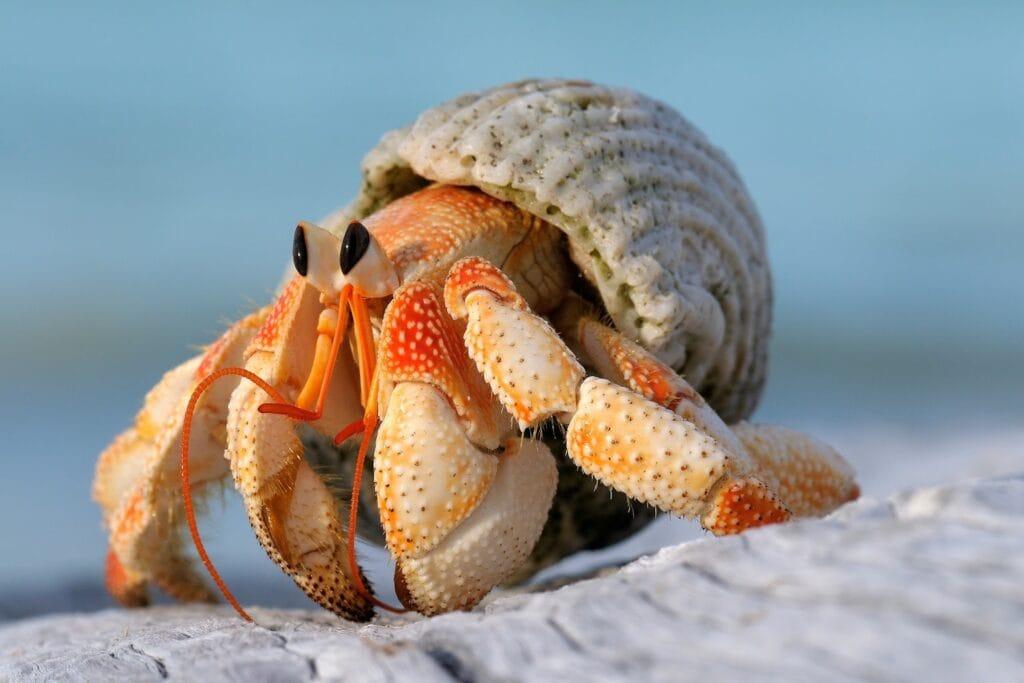
Hermit crabs are famous for using empty snail shells as portable homes. Unlike most crabs, their bodies are not fully protected by a hard outer shell. Instead, they depend on abandoned snail shells as mobile shelters, carrying their homes everywhere they go.
This strange lifestyle has turned hermit crabs into one of nature’s most fascinating examples of adaptation and survival.
Why Hermit Crabs Need Borrowed Homes
Most crabs have thick, armored bodies that protect them from predators and rough environments.
Hermit crabs are different.
Only the front part of their body is strongly protected. Their soft, curved abdomen remains vulnerable.
To solve this problem, evolution created an unusual strategy.
Hermit crabs search for empty snail shells and carefully move inside. Their curved bodies fit naturally into spiral interiors, creating a surprisingly secure shelter.
The shell becomes more than protection—it becomes the crab’s bedroom, fortress, and transportation system.
Without shells, many hermit crabs would struggle to survive.
The Great Shell Hunt
Finding the perfect shell is not easy.
Hermit crabs spend large portions of their lives evaluating potential homes.
A shell must be:
Large enough to fit comfortably
Light enough to carry
Strong enough to resist predators
Shaped correctly for balance and movement
Crabs inspect shells carefully before committing.
They rotate around openings, test the interior using their claws, and sometimes enter partially before deciding.
If a shell feels wrong, they quickly move on.
A poor shell choice may reduce movement speed or increase vulnerability.
Real Estate Competition Underwater
Suitable shells are valuable.
In some environments, shell availability becomes so limited that competition intensifies.
Researchers have observed hermit crabs gathering in groups whenever an empty shell appears.
Sometimes a chain of crabs forms—smallest to largest—waiting for a shell exchange.
When one crab upgrades to a larger shell, another immediately occupies the abandoned one, creating an orderly housing market beneath the sea.
This phenomenon is often called a “vacancy chain.”
Instead of fighting constantly, many crabs benefit from timing and opportunity.
Moving Day: One of Nature’s Fastest Decisions
Changing shells is risky.
During the transfer, a hermit crab briefly exposes its soft body.
Predators such as fish and octopuses may attack during these vulnerable moments.
Because of this danger, shell changes happen incredibly fast.
The crab positions both shells close together and performs a rapid switch that can take only seconds.
This quick relocation reduces exposure and increases survival.
Scientists studying shell exchanges continue discovering how accurately crabs judge shell size and quality.
More Than Protection: Shells Become Ecosystems
Over time, a hermit crab’s shell may become home to more than one creature.
Small algae, marine worms, and tiny organisms sometimes attach to the outside.
Some hermit crabs even develop partnerships with sea anemones.
The anemones gain transportation and access to food scraps.
The crab gains additional defense because anemones possess stinging cells that discourage predators.
What begins as a discarded snail shell can eventually become a tiny moving ecosystem.
Growing Means Constantly Moving
Hermit crabs never stop growing.
As they increase in size, their shells eventually become too small.
This means they must repeatedly search for larger homes throughout life.
Young crabs may switch frequently.
Older individuals can become extremely selective.
Growth creates constant pressure to find better housing.
In areas where snail populations decline or shells become scarce, hermit crab survival may also decrease.
Their entire lifestyle depends on the availability of abandoned shells.