

🌿 7 Amazing Amazon Rainforest Animals With Unbelievable Survival Secrets
Category: Wildlife | Nature | Amazon Rainforest
Tags: Amazon Rainforest, Amazon wildlife, rainforest animals, wildlife stories, jungle animals, biodiversity, South America, nature facts, exotic animals, conservation
Meta Description:
Discover seven fascinating Amazon animals with extraordinary survival strategies, including the pink toe tarantula, kinkajou, arapaima, giant silk moth, and red fan parrot.
7 Amazing Amazon Rainforest Animals With Unbelievable Survival Secrets
The Amazon Rainforest shelters more wildlife than any other ecosystem on Earth. Scientists estimate that one in every ten known species lives somewhere within this vast network of forests, rivers, and wetlands. Beyond its famous jaguars and anacondas lies an incredible collection of lesser-known animals, each with remarkable adaptations for survival.
From spiders that climb trees to giant fish that breathe air, these seven true stories highlight the hidden wonders of the Amazon.
1. The Tarantula That Lives Above the Forest Floor
Alt Text: Pink toe tarantula climbing a moss-covered rainforest branch.
Unlike many tarantulas that dig burrows, the pink toe tarantula spends much of its life high in the trees.
Its sticky foot pads help it climb smooth bark and branches with ease. During the day it hides inside silk-lined shelters made from curled leaves or tree hollows.
Instead of spinning webs to trap prey, it waits patiently before quickly catching insects, small frogs, or tiny lizards that wander within reach.
2. The Parrot That Becomes a Colorful Fan
Alt Text: Red fan parrot displaying its colorful neck feathers.
The red fan parrot, also known as the hawk-headed parrot, usually appears calm and slender.
However, when excited or threatened, it raises long neck feathers into an impressive circular fan decorated with brilliant shades of red and blue.
This dramatic display helps intimidate rivals while making the bird one of the most spectacular parrots in the Amazon.
3. The Tiny Frog With Brilliant Warning Colors
Alt Text: Brightly colored poison dart frog resting on a rainforest leaf.
Many poison dart frogs advertise their defenses with vivid colors.
Their bright patterns warn predators to stay away, reducing the need for escape or combat.
Interestingly, frogs raised in captivity often lose their natural toxicity because their wild diet of certain ants and mites provides the compounds used for chemical defense.
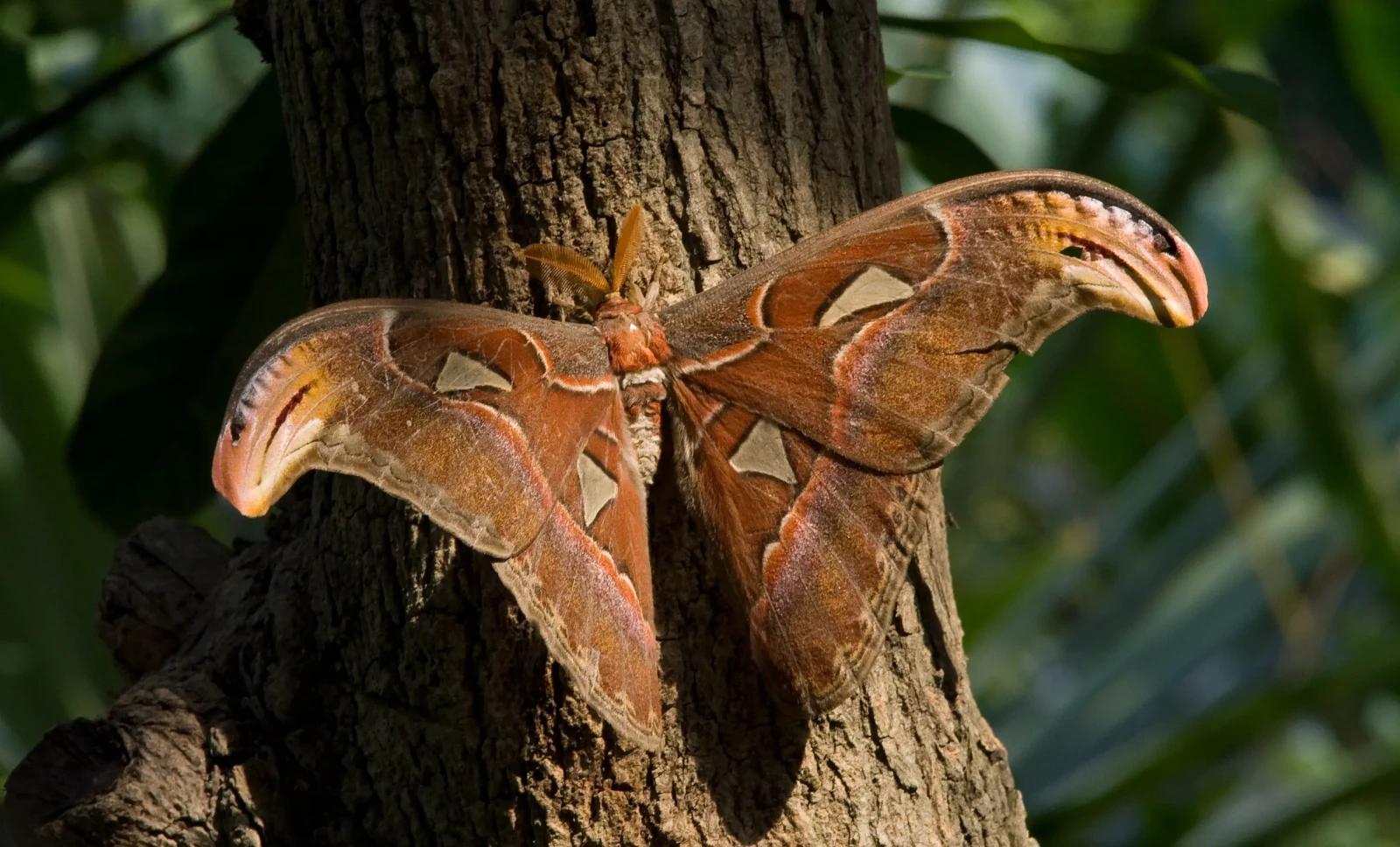
4. The Giant Moth That Never Eats
Alt Text: Giant silk moth resting on tree bark in the Amazon.
Some giant silk moths emerge from their cocoons with one important mission—finding a mate.
Adult moths lack functional mouthparts and cannot feed.
They survive entirely on energy stored while they were caterpillars, often living for only a week before completing their life cycle.
Despite their short adult lives, their enormous wings make them among the Amazon’s most beautiful insects.
5. The Nighttime Fruit Lover
Alt Text: Kinkajou eating ripe fruit high in the rainforest canopy.
The kinkajou is sometimes called the “honey bear,” although it is not closely related to bears.
This agile mammal spends almost every night searching the canopy for ripe fruit, nectar, and flowers.
Its long prehensile tail acts as a balancing aid while climbing, and its long tongue easily reaches nectar hidden deep inside blossoms.
By feeding on fruit, kinkajous help spread seeds throughout the rainforest.
6. The Giant Fish That Breathes Air
Alt Text: Arapaima surfacing in the Amazon River.
The arapaima is one of the largest freshwater fish in the world, capable of growing more than 3 meters (10 feet) long.
Unlike most fish, it must regularly surface to breathe air using a specialized swim bladder that functions much like a lung.
This adaptation allows it to survive in warm, oxygen-poor waters where many other fish would struggle.
7. Life Continues After Sunset
Alt Text: Moonlight shining through the Amazon rainforest canopy.
When darkness falls, the Amazon becomes even more active.
Owls begin hunting.
Frogs call from hidden pools.
Bats pollinate flowers.
Moths fill the air.
Nocturnal mammals quietly search for fruit beneath the moonlit canopy.
Nearly half of the rainforest’s wildlife becomes most active after sunset, revealing a completely different world from the daytime forest.
Why the Amazon Continues to Fascinate Scientists
The Amazon remains one of Earth’s greatest scientific frontiers.
Every year researchers identify new insects, amphibians, fish, fungi, and plants. Improved technologies such as environmental DNA sampling and camera traps continue revealing species that had escaped human observation for centuries.
Conserving the World’s Greatest Rainforest
Every Amazon species contributes to a complex web of life.
Fish disperse seeds.
Mammals pollinate flowers.
Birds spread fruits.
Insects recycle nutrients.
Protecting the rainforest safeguards these essential ecological relationships and preserves one of the planet’s richest centers of biodiversity.
Final Thoughts
The Amazon Rainforest is a place where survival has inspired extraordinary adaptations.
Tree-climbing tarantulas, air-breathing fish, colorful parrots, giant moths, and nocturnal fruit lovers all demonstrate nature’s remarkable creativity.
As scientists continue exploring this vast wilderness, countless more stories are waiting to be discovered.
WordPress Image SEO
| Image | File Name | Alt Text |
|---|---|---|
| 1 | pink-toe-tarantula.jpg | Pink toe tarantula climbing a rainforest tree branch |
| 2 | red-fan-parrot.jpg | Red fan parrot displaying colorful neck feathers |
| 3 | poison-dart-frog.jpg | Bright poison dart frog resting on a tropical leaf |
| 4 | giant-silk-moth.jpg | Giant silk moth resting on Amazon rainforest bark |
| 5 | kinkajou-fruit.jpg | Kinkajou eating ripe fruit high in the Amazon canopy |
| 6 | arapaima-surfacing.jpg | Giant arapaima surfacing to breathe in the Amazon River |
| 7 | amazon-night-canopy.jpg | Moonlight filtering through the Amazon rainforest canopy |
Leave a Reply