

4
🌿 7 Hidden Amazon Animal Stories That Seem Too Strange to Be Real
Category: Wildlife | Nature | Amazon Rainforest
Tags: Amazon wildlife, Amazon rainforest, strange animals, jungle creatures, rare animals, rainforest biodiversity, wildlife facts, South America, exotic animals, nature stories, Amazon ecosystem
Meta Description:
Journey deep into the Amazon Rainforest and discover seven little-known animal stories, from the bizarre matamata turtle to the tiny pygmy marmoset and the remarkable army ants that reshape the forest floor.
7 Hidden Amazon Animal Stories That Seem Too Strange to Be Real
The Amazon Rainforest is often called the most biologically diverse place on Earth. While jaguars, macaws, and anacondas are famous worldwide, countless lesser-known animals quietly live extraordinary lives hidden beneath the rainforest canopy.
Some are masters of disguise. Others survive by working together in enormous colonies. A few have evolved appearances so unusual that they seem almost prehistoric.
Here are seven fresh and fascinating stories about Amazon animals that deserve far more attention.
1. The Turtle That Looks Like a Pile of Leaves
Alt Text: Matamata turtle camouflaged among leaves underwater in the Amazon.
If you saw a matamata turtle underwater, you might mistake it for a pile of dead leaves.
Its rough shell, flattened head, and ragged skin flaps help it blend perfectly with the riverbed. Instead of chasing prey, the turtle waits patiently until a fish swims close.
Then, in a split second, it opens its huge mouth and creates a powerful suction that pulls the fish inside.
This unique hunting technique allows the matamata to catch prey without swimming fast.
2. The Bird With an Extraordinary Hairdo
Alt Text: Male umbrella bird displaying its large feathered crest.
The Amazon Umbrellabird is famous for its dramatic appearance.
The male has a large feathered crest that hangs over its head like an umbrella. It also possesses a long inflatable throat pouch that produces deep booming calls during the breeding season.
These sounds travel long distances through the dense rainforest, helping females locate potential mates.
Although its appearance may seem unusual, the umbrellabird plays an important role by spreading the seeds of rainforest fruits.
3. The Army That Never Stops Marching
Alt Text: Massive column of Amazon army ants moving across the rainforest floor.
Army ants don’t build permanent nests.
Instead, millions of ants travel together in enormous moving colonies that constantly search for food.
As they march across the forest floor, insects, spiders, frogs, and even small reptiles flee their path.
Interestingly, many birds follow these swarms—not to eat the ants, but to catch the insects escaping from them.
This creates one of the Amazon’s most fascinating examples of animals benefiting from each other’s behavior.
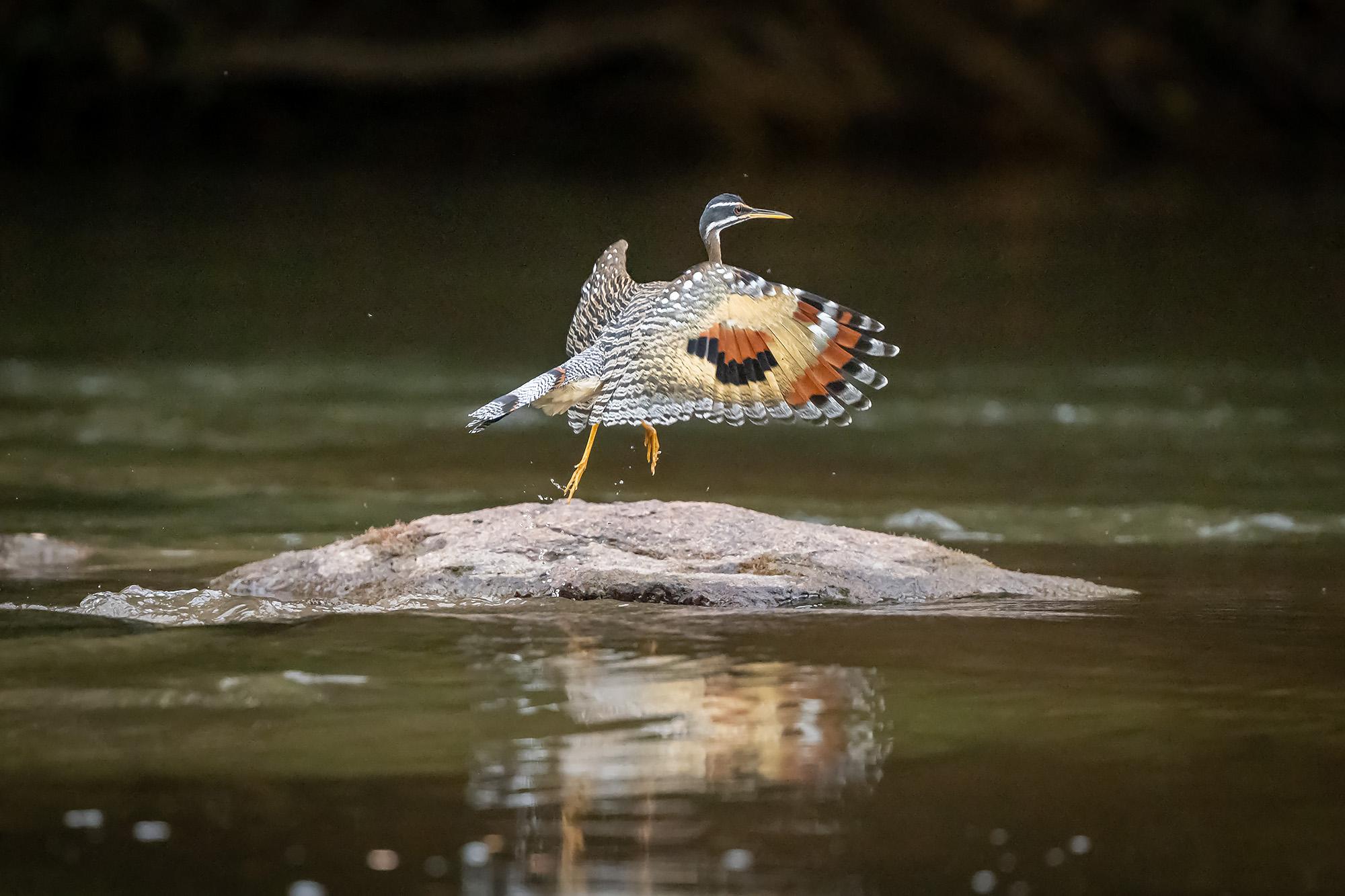
4. The Bird That Opens Wings Like a Butterfly
Alt Text: Sunbittern displaying colorful patterned wings beside an Amazon stream.
The sunbittern appears fairly ordinary until it feels threatened.
Suddenly, it spreads its wings to reveal spectacular patterns resembling enormous butterfly eyes.
This startling display often surprises predators long enough for the bird to escape.
Unlike many rainforest birds, the sunbittern spends much of its time walking quietly beside streams searching for insects, small fish, and frogs.
5. The World’s Smallest Monkey
Alt Text: Tiny pygmy marmoset clinging to a rainforest tree branch.
The pygmy marmoset is the smallest monkey on Earth.
Adults weigh little more than an apple and can comfortably sit in the palm of a human hand.
Despite their tiny size, these monkeys are incredibly agile.
They leap between branches, feed on tree sap, insects, and fruit, and communicate using high-pitched whistles that are often too faint for humans to hear.
Living in close family groups helps protect them from predators.
6. The Insect That Disappears Into Leaves
Alt Text: Leaf-mimicking katydid resting on rainforest vegetation.
Some Amazon katydids have evolved wings that look exactly like damaged leaves.
Their wings display:
- Fake leaf veins
- Brown spots resembling decay
- Tiny holes that imitate insect damage
Even experienced researchers sometimes overlook them.
This extraordinary camouflage allows the insects to avoid hungry birds, reptiles, and mammals.
7. Every Fallen Tree Creates New Life
Alt Text: Fallen tree in the Amazon rainforest covered with moss, fungi, and insects.
When a giant rainforest tree falls, its story isn’t over.
Within days, fungi begin breaking down the wood.
Beetles tunnel inside.
Ant colonies move in.
Tiny frogs hide beneath damp bark.
Young plants sprout from the decaying trunk, using its nutrients to begin new life.
Ecologists call these fallen logs “nurse trees” because they support hundreds of species during decomposition.
In the Amazon, even death becomes the beginning of another thriving ecosystem.
The Endless Wonders of the Amazon
Scientists believe that thousands of Amazon species remain undiscovered. Every expedition into remote forests reveals new insects, fish, fungi, amphibians, or plants that have never before been documented.
Modern tools such as camera traps, drones, and environmental DNA sampling continue to uncover hidden wildlife, proving that the Amazon still holds countless secrets waiting to be explored.
Why Conservation Matters
The remarkable animals of the Amazon depend on healthy forests and clean rivers. Habitat loss, illegal logging, mining, and climate change threaten many of these unique species.
Protecting the rainforest safeguards not only its wildlife but also one of the planet’s most important ecosystems—one that helps regulate climate, store carbon, and support millions of people.
Conclusion
The Amazon Rainforest is a place where nature constantly challenges our imagination. A turtle disguised as leaves, a monkey no larger than a squirrel, birds with dazzling displays, and insects that vanish into foliage all demonstrate the incredible creativity of evolution.
These hidden stories remind us that some of the most extraordinary wildlife on Earth is still waiting quietly beneath the emerald canopy of the Amazon.
Leave a Reply