

🌿 7 Hidden Amazon Wildlife Stories That Prove Every Creature Has a Superpower
Category: Wildlife | Nature | Amazon Rainforest
Tags: Amazon Rainforest, Amazon wildlife, rainforest animals, wildlife facts, biodiversity, jungle creatures, South America, conservation, rare animals, nature stories
Meta Description:
Discover seven fascinating Amazon wildlife stories featuring orchid bees, squirrel cuckoos, spectacled caimans, giant centipedes, tamarins, sloths, and more.
7 Hidden Amazon Wildlife Stories That Prove Every Creature Has a Superpower
The Amazon Rainforest is one of the last great wildernesses on Earth, home to an astonishing variety of life. Every layer of the forest—from the towering canopy to the muddy riverbanks—is filled with species that have evolved remarkable ways to survive.
Some animals rely on teamwork, others on camouflage, and a few possess abilities so unusual that they seem almost unbelievable. Here are seven fresh stories from the Amazon that highlight nature’s incredible ingenuity.
1. The Bird That Hunts Like a Squirrel
Alt Text: Squirrel cuckoo climbing through branches in the Amazon canopy.
The squirrel cuckoo earns its name from the way it moves.
Instead of flying long distances, it often runs and leaps through branches with quick, agile movements that resemble a squirrel.
Its long tail helps it balance while searching for caterpillars, insects, tree frogs, and small lizards hidden among the leaves.
2. The River Guardian With Watchful Eyes
Alt Text: Spectacled caiman floating quietly in an Amazon river.
The spectacled caiman spends much of its life almost completely submerged.
Only its eyes and nostrils remain above the water, allowing it to watch for fish and other prey while staying hidden.
Young caimans often remain close to their mothers, who protect them during their vulnerable early months.
3. The Slow Traveler That Saves Energy
Alt Text: Three-toed sloth hanging upside down in a rainforest tree.
The three-toed sloth moves slowly for a good reason.
Its leaf-based diet provides relatively little energy, so conserving energy is essential.
Specialized muscles and curved claws allow the sloth to hang comfortably upside down for hours while digesting its food.
Algae sometimes grow on its fur, providing additional camouflage among moss-covered branches.
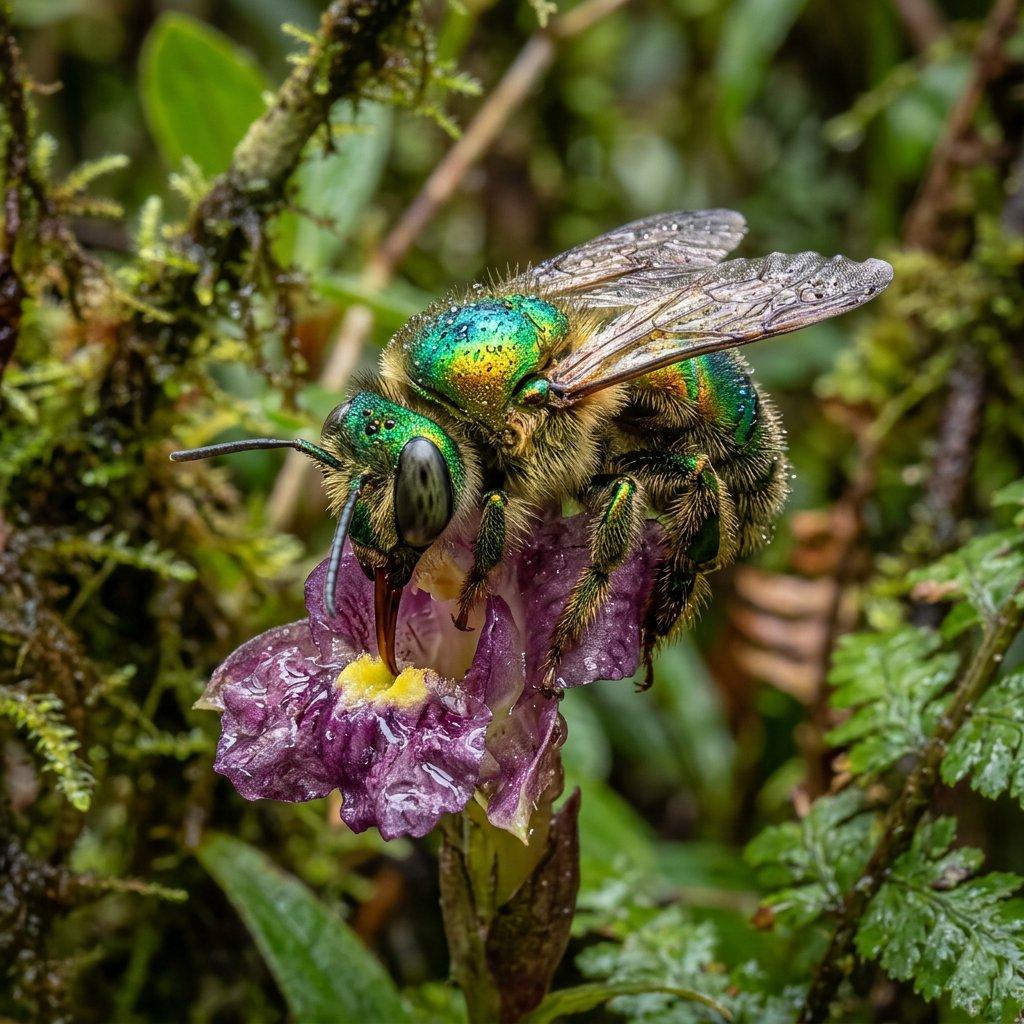
4. The Bee That Collects Perfume
Alt Text: Metallic green orchid bee visiting a tropical flower.
Male orchid bees gather fragrant chemicals from orchids and other flowers.
Rather than using these scents for food, they store them in special pockets on their hind legs.
Scientists believe these perfumes help attract females during courtship, making orchid bees some of the rainforest’s most unusual pollinators.
5. Tiny Monkeys That Care for One Another
Alt Text: Family of tamarins grooming each other on a tree branch.
Tamarins are highly social primates.
Group members frequently groom one another to strengthen social bonds.
In many species, fathers and older siblings help carry babies for much of the day, allowing mothers more time to feed.
This cooperative care greatly increases the survival of young tamarins.
6. The Night Hunter Beneath the Leaves
Alt Text: Giant Amazon centipede crossing the rainforest floor at night.
The Amazon giant centipede becomes active after sunset.
Using highly sensitive antennae, it searches through leaf litter for insects and other small animals.
Despite its intimidating appearance, it usually avoids larger animals and spends daylight hours hidden beneath logs, rocks, or fallen branches.
7. The River That Connects Every Living Thing
Alt Text: Peaceful Amazon River glowing in golden evening light.
The Amazon River is the lifeblood of the rainforest.
Its seasonal floods transport nutrients, nourish forests, create fish breeding grounds, and provide water for countless animals.
Many species depend on these annual floods to complete their life cycles, making the river one of the world’s most important natural systems.
A Rainforest Still Full of Discoveries
Researchers continue to uncover new Amazon species every year, including insects, amphibians, fish, fungi, and flowering plants.
Even familiar animals often surprise scientists with previously unknown behaviors, proving that the rainforest still holds countless mysteries.
Why Protecting Biodiversity Matters
Every Amazon species has a purpose.
Bees pollinate flowers.
Sloths support tiny ecosystems in their fur.
Caimans help regulate aquatic food webs.
Monkeys disperse seeds that become future forests.
Protecting biodiversity means preserving these intricate relationships that keep the rainforest healthy.
Final Thoughts
The Amazon Rainforest is filled with extraordinary wildlife that rarely makes headlines.
From perfume-collecting bees and acrobatic birds to caring monkey families and patient river predators, every species contributes to one of Earth’s richest ecosystems.
The more we explore the Amazon, the more we realize that even its smallest creatures have remarkable stories to tell.
WordPress Image SEO
| Image | File Name | Alt Text |
|---|---|---|
| 1 | squirrel-cuckoo-amazon.jpg | Squirrel cuckoo moving through branches in the Amazon canopy |
| 2 | spectacled-caiman-river.jpg | Spectacled caiman floating quietly in an Amazon river |
| 3 | three-toed-sloth-tree.jpg | Three-toed sloth hanging from a rainforest tree branch |
| 4 | orchid-bee-flower.jpg | Metallic green orchid bee collecting fragrance from a flower |
| 5 | tamarin-family-grooming.jpg | Family of tamarins grooming each other in the rainforest |
| 6 | amazon-giant-centipede.jpg | Giant Amazon centipede walking across the rainforest floor |
| 7 | amazon-river-golden-hour.jpg | Golden sunset over the Amazon River surrounded by rainforest |
Leave a Reply